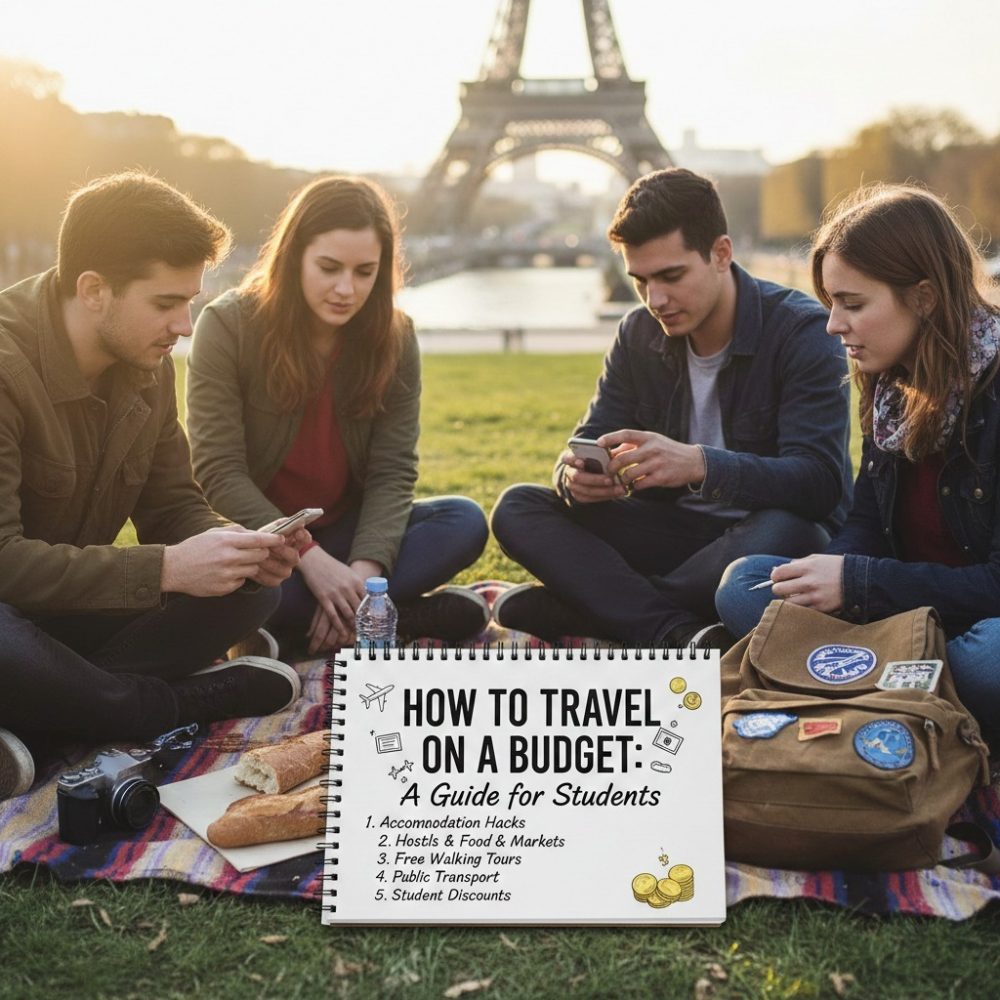
Indeed, CIPD students feel exhausted, as they have to manage their studies along with their jobs to gain practical experience. Due to this, they get burned out more quickly, which leads to poor mental and physical health. However, to prevent this, students need to take frequent breaks. When it comes to taking a break, the most common idea that pops up in every individual’s mind is to travel. Nevertheless, it is vital to maintain your budget, as students have a limited amount of money.
If you want to travel, but have a tight budget, then you don’t have to worry.
In this blog, I will guide you on how you can travel on your allocated budget without compromising on fun.
So, are you ready? Let’s begin!
How to plan your budget?
Travelling can burn a hole in your pocket; therefore, it is vital to plan your budget efficiently. Here’s how you can plan your budget smartly:
- Destination:
Firstly, before deciding on a budget, you must decide on your destination. For instance, if you are travelling to a city or the countryside in your own country, then the expenses will be lower. However, if you are traveling to another country, the expenses will be much higher. Thus, you must choose a destination based on your financial standing. If you are a resident of the UK and want to travel to the budget-friendly places, then you can consider:
- Greece
- Albania
- Morocco
- Bali
- Turkey
- Cape town
Although these places are cost-effective, they provide a memorable travel experience for tourists.
- Transport:
In addition to this, if you are tight on cash, then you must choose a destination that requires economical transportation. For that, you can choose domestic travel, as you can use trains and buses for travel. However, if you can afford plane tickets, then consider international travel.
The following are some countries that you may travel to with an estimated budget:
- USA: £400 to £1000 + return
- Asia: £500 to £1,200 + return
- Africa/Middle East: £350 to £900 + return
However, it is vital to remember that this is just estimated prices, and the prices may vary depending on the destinations, airlines, and time of year.
- Accommodation:
Furthermore, if you are visiting a place and have a friend’s or relative’s place to stay, then it’s a good thing. However, if you don’t have any, you can rent hostel rooms or guest rooms for lower prices, rather than wasting your money on luxury hotels.
- Shopping:
Besides this, shopping is a part of every trip. Hence, it is advised to dedicate some money to shopping. Setting a budget for this enables you to avoid overspending.
- Emergencies:
Apart from that, you must also allocate a sufficient amount for emergencies to avoid any issues.
Tips to stay on your allocated budget
Now, let’s discuss some effective tips for your allocated budget.
- Utilize student discounts:
You can get many discounts on flights, trains, and other essential things by using your student ID card. For that, you must search for the companies that offer these discounts and enjoy your trip without thinking about your budget.
- Travel during off-peak days:
In addition to this, most tourists travel during off-peak seasons, as the prices of flights, hotels, and attraction sites are often half of their peak-day prices. As a result, you can enjoy more at affordable rates.
- Use local transport and eat at local shops:
Furthermore, you can also save some money by using local transport. Using cabs can be quite costly for a student. Additionally, enjoy the local taste of your visited place, as it is cheaper and offers an enriched taste of flavors.
- Visit low-cost or free places:
Moreover, you can visit parks, free museums, and local markets to explore different cultures and have fun without spending too much money on entrance fees for luxury places.
- Prioritize destinations where the pound’s rate is higher:
Most importantly, you must choose destinations where the local currency is weaker than the pound. Some countries with relatively weaker currencies include:
- Thailand
- Egypt
- South Africa
- Malaysia
- Thailand
- Indonesia
- Bulgaria
- Peru
Managing studies while travelling
However, fostering your mental health by enjoying such trips doesn’t mean compromising on your studies. You must spare sufficient time to spend on studying. For instance, you can study while travelling. This will help you utilize spare time efficiently. However, if you have loads of CIPD assignments and you don’t have sufficient time to complete them on time, you can seek reliable CIPD Assignment Writing Services from professionals.
All in all!
Taking breaks from studying is crucial to avoid burnout and other mental health issues among students. For that, you must travel to a peaceful and calm place to freshen up your mind. However, before travelling, you must make a realistic and affordable travel budget.
I hope that this blog will help you with your budget planning and allow you to enjoy a student-friendly trip.