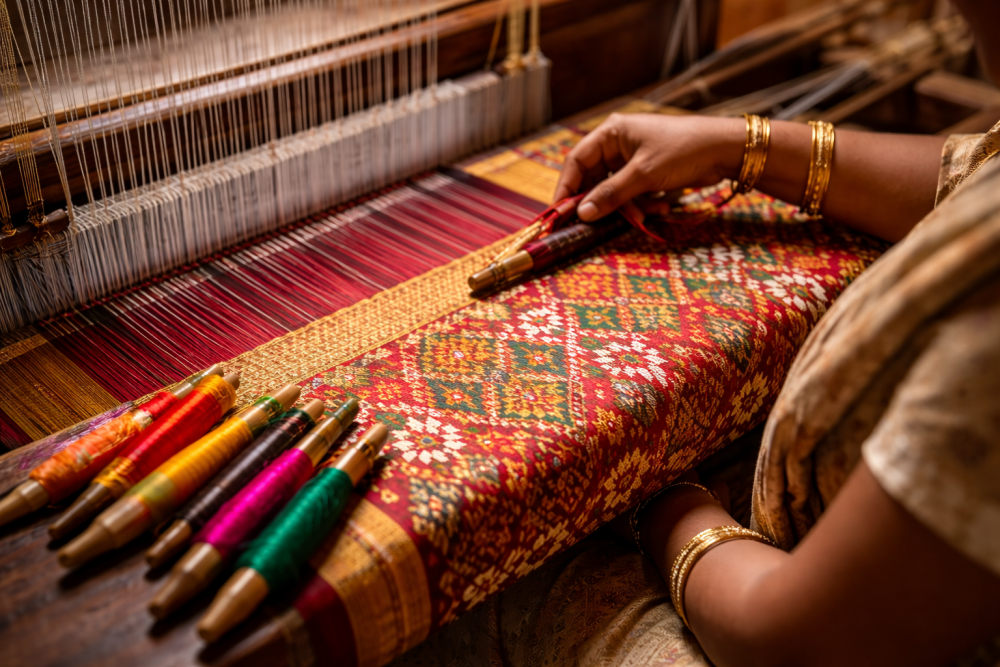
Handloom silk sarees represent far more than mere clothing; they embody India’s rich cultural legacy, the artistry of skilled weavers, and enduring sophistication. As power looms and mass-produced imitations saturate the market, the ability to recognize a genuinely authentic handloom silk saree has become both essential and somewhat difficult.
For those who appreciate sarees deeply, or anyone considering a heritage piece for a wedding or significant event, understanding how to discern authenticity allows for a more informed and significant decision.
1. Pay Attention to the Weave, Not Just the Design
Examining the weave is the most trustworthy method of identifying a real handloom silk saree. Because handloom sarees are woven by hand,
- The weave won’t be exactly the same.
- Small anomalies are normal and expected.
- It feels more organic and richer.
Handloom silk has subtle variations that show the artisan’s skill and effort, in contrast to machine-made sarees that seem excessively perfect.
2. Examine the saree’s front and back.
Examine the back of the saree after turning it over. The design of genuine handloom silk sarees, particularly those with traditional weaves, is nearly the same on both sides.
This is especially true for complex weaving methods where designs are made directly on the loom instead of being printed or surface-embroidered. A non-handloom process is frequently indicated by a back that is obviously faded or incomplete.
3. Recognize the Quality of Silk and Zari
Instead of being glossy or artificial, pure silk has a natural sheen that feels soft and opulent. The fabric should feel smooth to the touch but not slick like synthetic silk.
In a similar vein, real zari, or metallic threads, are expertly woven into the saree. While imitation zari frequently appears overly bright or plasticky, real zari has a subtle, elegant sheen.
4. Examine the Precision of Patterns and Motifs
Traditional handloom silk sarees are renowned for their symbolic designs, which are frequently influenced by geometry, nature, or cultural symbolism. It takes a great deal of precision to weave these motifs thread by thread.
The intricacy of the weaving process is reflected in the flawless pattern alignment throughout the fabric of traditional weaves like Patola. It’s probably not a genuine handloom item if the motifs look printed, excessively flat, or out of alignment.
Because of its centuries-old double ikat weaving tradition, craftsmanship, and durability, patola silk sarees are a popular choice among collectors and heritage enthusiasts.
5. Experience the Saree’s Weight and Fall
Genuine handloom silk sarees have a unique drape and weight. When worn, they fall elegantly and feel substantial without being stiff.
Chemical finishes can make machine-made sarees feel lighter or abnormally rigid. With each wear, a real handloom saree softens and beautifully conforms to the body.
6. Find Out Where the Weaving Originated
Each handloom silk saree tells a tale about the artisans who weave it as well as the area from which it originates. Reputable vendors are always open and honest about:
- The method of weaving
- The place of origin (community or region)
- The amount of time needed to make the saree
By maintaining traditional weaving techniques and assisting talented craftspeople who continue these crafts, heritage-focused companies like Roopkala Heritage highlight authenticity.
7. Don’t Be Misled by Price Alone
Although the real handloom silk sarees are high quality because of the efforts put in them, the price is not the only determinant. Very cheap prices are usually an indication of large scale production and a good price with the information of craftsmanship is a greater indication of genuineness.
Consider a handloom saree as a long-term investment – in quality and in keeping India in the textile heritage.
Final Thoughts
It takes time, knowledge and observation to find a true handloom silk saree. By looking at the weave and zari, to knowing the story of the craft, every step will bring you nearer to having something really special.
By purchasing a true handloom work, more so, heritage weaves such as Patola, you are not merely purchasing a saree. You are following tradition, art and eternal beauty that will never go out of fashion.