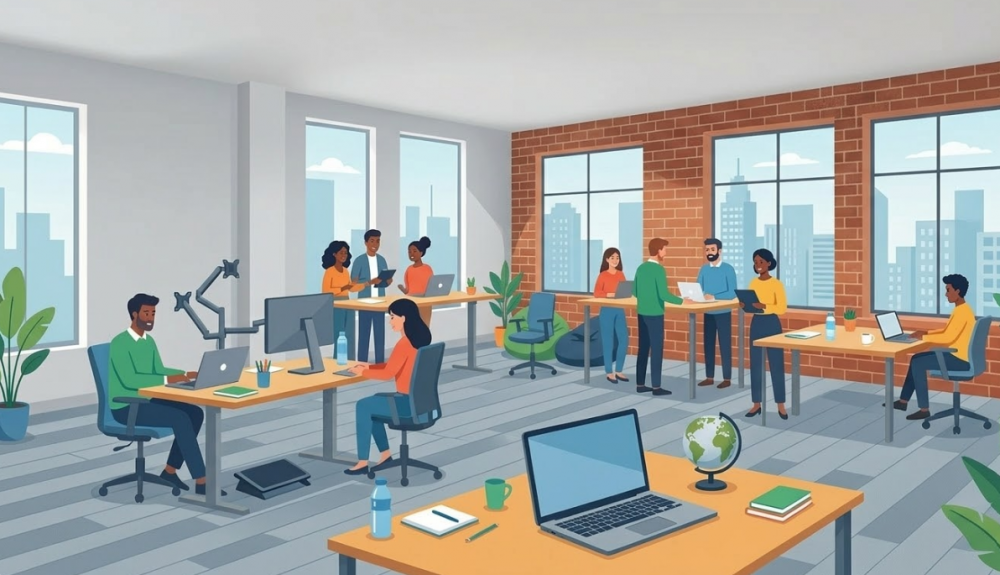
Startups typically work under financial constraints, using small teams and working under rough schedules. Although the founders invest much in product development, recruiting, and finances, an aspect that spares their concern is the ergonomics at the workplace. A painful workstation might appear to be a minor problem, but it has the potential to give rise to backache, exhaustion, poor posture, and inefficiency.
Building an ergonomic office does not mean it comes with expenses. You can do it under a budget by following some simple tips and making some minor changes. Read this blog to know how.
Why Ergonomics Matters for Startups
During the initial phase of an organization, each individual team is of essential importance. Workers who have to work long hours under unfavorable conditions are also impacted on their well-being and performance.
An ergonomically designed working area assists:
- Minimise physical tension and pain.
- Get more focused and productive.
- Reduce the probability of repetitive strain injuries.
- Promote the health of employees over the long-term.
- Establish a workplace that is more pleasant.
Since some startups are based on a small team but a highly efficient one, even minor comfort changes could result in a tangible increase in performance.
Start with Proper Seating
The chair is the greatest component of an ergonomic workspace since most of the employees are seated.
Rather than purchasing the pricier high-end chairs, startups have the option of buying the low-cost ergonomic ones that have the necessary features, like:
- Adjustable seat height
- Lower back lumbar support.
- Adjustable armrests
- Breathable back support
Should the budget be slim, even basic upgrades may be applied to existing chairs. A basic chair can be made far more comfortable by adding lumbar support cushions or seat pads.
The other practical tip is to make sure that the employees have their feet flat on the floor and 90-degree angles at the knees. This eases lower-back pressure and works to enhance posture.
Optimize Desk Setup
An appropriate desk configuration aids employees to sit in a neutral position during work. Luckily, to enhance ergonomics at work, costly furniture is not mandatory.
Startups could follow a few basic rules:
- The level of the monitor must be eye-level.
- The mouse and keyboard must be easy to reach.
- The forearms are to be at right angles to the desk.
- Arms are to be straight when typing.
Where there are inadequate monitors, then simple monitor risers may be used or even stacked up books to get the screen to the right height.
In the case of laptops, the sitting back can be greatly enhanced with a laptop stand, an external keyboard, and a mouse. Such an arrangement does not allow employees to sit in front of their screens hunched over.
Make Use of Natural Lighting
The importance of lighting in the workplace is significant. Dark lighting may lead to eye strain, headaches, and tiredness.
Startups can alleviate these problems by ensuring that they place their desks as close to the window as possible. Natural light enhances visibility and makes the workplace feel better.
To avoid glare on screens:
- Win windows position monitors at right angles.
- Have adjustable blinds or curtains.
- Use soft desk lamps where further brightness is required.
LED desk lamps are cheap and consume less energy, which makes them a viable choice in start-ups.
Encourage Movement Throughout the Day
The most comfortable arrangement will still not substitute the advantages of exercising. Long sitting may result in stiffness, a decrease in circulation, and fatigue.
Healthy habits can be promoted through startups that offer slight respites during the working time. Simple practices can include:
- Sitting or getting up every 30 to 60 minutes.
- Walking during phone calls
- Conducting short standing meetings.
- Incorporation of short stretch intervals in long working periods.
Some startups also furnish informal standing work places with high tables or counters. This gives the employees the flexibility to take turns between sitting and standing without necessarily having to buy costly standing desks.
Reduce Clutter for Better Workflow
A neat working place helps in physical comfort and clarity of the mind. Scattered desks are known to compel the employees to extend, reach, or strain more than is necessary.
The simple organisational tools that can enable startups to keep their environment ergonomic and productive include:
- Cable organizers
- Desk trays for documents
- Compact storage shelves
- Minimal desk accessories
Storing of common products at convenient locations will assist the employees to continue undertaking their natural working posture during the course of the day.
Involve Employees in Workspace Design
Employees all work differently. Others might need extra arm support and others might be good candidates to have footrests or movable monitors.
Startups are able to obtain employee feedback on their workplace requirements. This serves to make ergonomic improvements practical and useful.
Even a simple survey or informal discussions can show some minor problems which might be unknown. The earlier the concerns are addressed, the better space will be created to aid the whole team.
Focus on Gradual Improvements
Start-ups are not supposed to construct an ideal ergonomic office at once. Rather, a situation can be made better as the company expands.
An effective strategy is to make upgrades by impact a priority:
- Comfortable seating
- Proper monitor height
- External keyboard and mouse for laptop users
- Better lighting
- Workspace organization
Final Thoughts
An ergonomic office is not only a luxury that can be enjoyed in enormous companies. To startups, it is an expedient investment in the well-being and productivity of the employees.
Startups can create a comfortable and supportive working environment without going over their financial capabilities. A comfortable workspace is not the only benefit of a well-designed workplace in the long-term. It assists startups to develop a workplace culture which appreciates the performance and well-being of the employees.