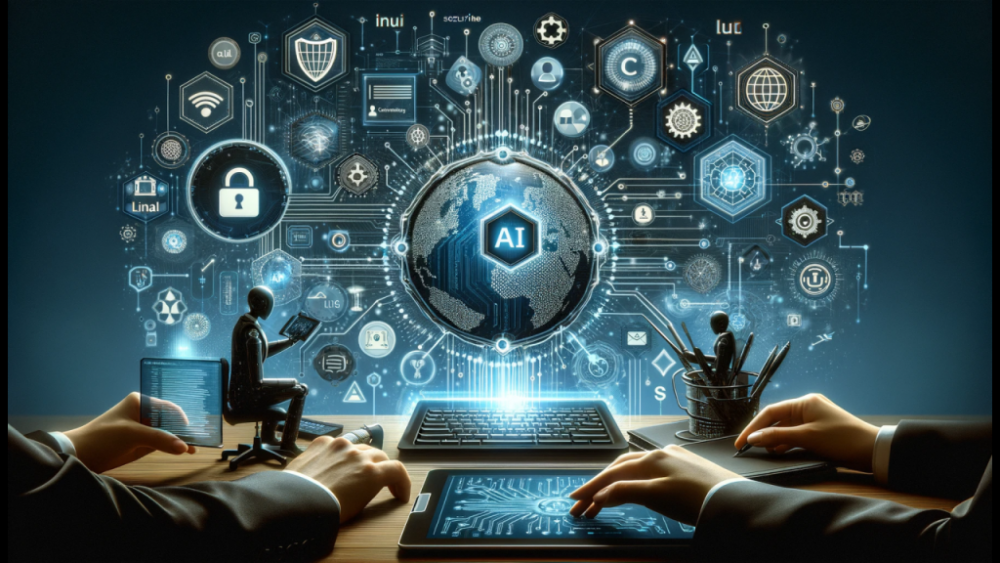
The healthcare sector is changing the way it does business with the help of technology on a huge scale. All these innovations from electronic health records (EHRs) to telemedicine and Internet-connected medical devices (IoMT). Essentially technology-based and are oriented to enhance quality of patient care as well as the operational efficiency of healthcare organizations.
Unfortunately, this transition makes healthcare organizations a target of cyber threats. Consequently, the safeguarding of sensitive patient data has become the utmost priority. In response to such a demand, Artificial Intelligence (AI) is turning into a vital instrument in the healthcare industry. Fight against cyber threats.
Here, we are to look into how AI is revolutionizing healthcare cybersecurity. And why taking up a cyber security course or a cyber security institute would be a good move professionally. Be able to handle the challenges of today’s world.
Read More: Cybersecurity for Healthcare: Protecting Patient Data in the AI Era
The Growing Cyber Threat in Healthcare
The healthcare sector is among the top industries that hackers target. Malicious activities like ransomware, phishing, and data breaches are a risk to the confidentiality of patient records, in addition to putting the entire medical network at risk. Such situations, if they occur, might lead to serious repercussions
- Disruption of patient care: Ransomware attacks can halt hospital operations, delaying treatments and diagnostics.
- Financial losses: Recovering from a cyberattack can cost millions, including fines for non-compliance with data protection regulations.
- Reputation damage: Patients trust healthcare providers with their most sensitive information. Breaches can severely erode trust.
Given these risks, healthcare institutions are investing heavily in cybersecurity measures, with AI emerging as a vital tool.
How AI Enhances Cybersecurity in Healthcare
AI offers innovative solutions to combat modern cyber threats. Here’s how it is reshaping cybersecurity in healthcare:
1. Real-Time Threat Detection
AI-driven systems have the capability to oversee network traffic, user behavior, and system logs instantly. In contrast to conventional security measures, AI algorithms are able to identify irregularities that could signify the presence of cyber threats, for instance, a series of unusual login attempts or unauthorized access to patient data.
2. Predictive Analysis for Threat Prevention
AI, with the help of machine learning, is able to look into the past data and give a forecast of possible cyberattacks. By figuring out the patterns of the attacks that occurred before, healthcare organizations will be able to go on the offense and thus, tightening their security in the most vulnerable areas, making the chances of a risk turning into a problem very low.
3. Automating Responses to Attacks
AI-powered security systems are equipped with a capability to initiate a certain set of actions for specific threats without human intervention. For example, they may perform the task of severing network connections of infected machines or closing down the entry point for suspicious IP addresses. Thus, the duration between the occurrence of the event and the reaction is shortened, and the scope of the incident is limited.
4. Securing Medical Devices (IoMT)
Healthcare-related devices that are connected are frequently targeted; however, Artificial intelligence aids in keeping such devices under surveillance and safe by which it is quite a viable option. Once AI gets to know the normal working pattern of the gadgets, it can instantly point out those abnormal activities in which hackers may be trying to gain access.
5. Enhancing Compliance and Data Protection
Artificial intelligence is a great help for healthcare organizations to be able to comply with regulations such as HIPAA and GDPR. Automated auditing guarantees that the storage and sharing of patient data are done in a secure way which is a way of lessening the risk of breaches.
Importance of Cybersecurity Training in Healthcare
While AI is used, human knowledge is still necessary. Medics and tech departments ought to be skilled to grasp AI-based security systems and to follow the correct procedures. A cyber security training program gives employees information on how to recognize threats, react to incidents, and handle risks.
Health care organizations can take advantage of a comprehensive cyber security curriculum that covers different aspects of the use of AI in security, network protection, hacking for good, and risk evaluation. Doctors and nurses, by enrolling in a well-known cyber security academy, can turn into the defenders of the core systems against which the medical supply chain is vulnerable to attacks, and of patient data confidentiality.
The Future: AI and Human Collaboration
The next era in healthcare security will be a collaboration of AI and human expertise. To illustrate, AI offers speed, accuracy, and the ability to predict events, but a developed cybersecurity professional will still be needed to analyze the output, make high-level decisions, and deal with the complicated response of threats.
Healthcare organizations that integrate AI into their cybersecurity strategy and invest in continuous cyber security training are better positioned to withstand attacks, protect patient data, and ensure uninterrupted medical services.
Conclusion
Artificial intelligence is transforming cybersecurity in healthcare to be able to detect threats as they happen, make predictions, respond automatically, and manage medical devices in a secure manner. Still, tech is not the whole story. Healthcare orgs need to protect patient info by giving proper cyber security trainings, taking a cyber security course, and getting enrolled in a reputed cyber security institute.
Whereas cyber threats keep on getting more sophisticated, the use of AI along with the expertise of cyber security professionals will turn out to be a solid and dependable healthcare system that will not only safeguard patient data but also ensure the digital healthcare of the future.