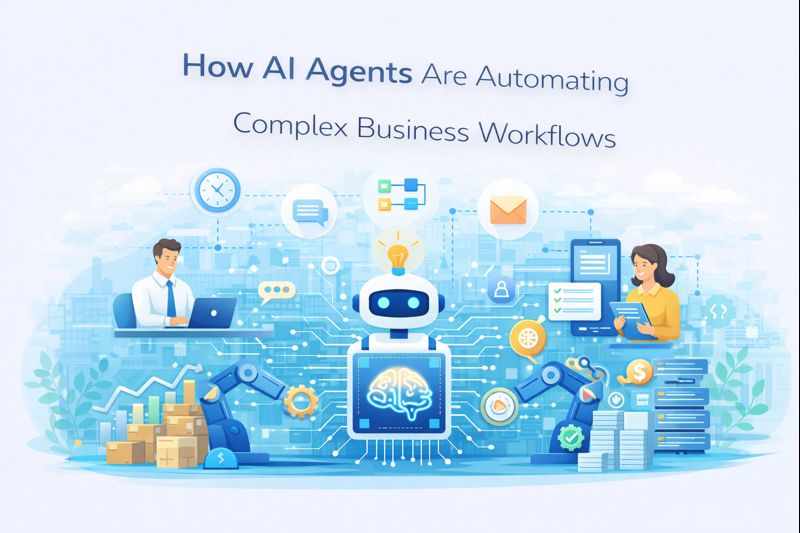
A few years ago, “automation” meant a bot sending you a reminder or maybe filling in a spreadsheet. Nothing fancy. But lately, something bigger has started to happen. Companies are now using AI agents, basically software systems that can think a little, act independently, and handle surprisingly complex work.
If that sounds like a leap, it is. These agents are starting to take on tasks that used to need teams of people. Finance departments, marketing teams, even logistics operations are quietly letting AI handle the boring stuff while humans focus on things that need, well, a bit more brain and empathy.
So, What Exactly Are These AI Agents?
The short version: they are like digital coworkers. Instead of just following a checklist, they can make small decisions on their own. Give them a goal, access to the right data, and a few parameters, and they’ll get to work.
They can pull numbers from different databases, interpret them, and even talk to other systems. For instance, an AI agent in a marketing team might analyze ad performance, adjust spending across platforms, and generate a report before lunch. Over in HR, another agent could be screening resumes or scheduling interviews while you are still on your morning coffee.
What makes this different from older automation tools is adaptability. If something unexpected happens, these agents don’t just freeze up and throw an error. They adjust, recalculate and keep moving with the help of generative AI systems that can interpret natural language, summarize reports, or even write status updates automatically.
Why Everyone’s Talking About It
For businesses, the appeal is pretty obvious. Workflows are getting faster and cleaner, with fewer mistakes. People don’t have to copy and paste data between systems or sit through endless manual updates. AI agents can handle that in seconds.
It’s not just about speed either. These systems can operate continuously, handle large quantities of data and still preserve precision. Certain companies are establishing AI agents to observe internal processes in real time for identifying issues before they escalate into major crises.
It’s a massive step up from simple task automation. It’s more like giving your company a digital nervous system that’s always on, always learning, and never asking for a day off.
The Messy Reality of Scaling It
Of course, this all sounds great on paper, but actually scaling AI agents across an organization is messy. Every department has its own systems, data quirks, and ways of working. Teaching AI to navigate that without breaking something takes time.
There’s also the human side of it. People get nervous when machines start doing parts of their jobs, even if it’s just the repetitive stuff. The smartest companies are finding ways to make this transition less intimidating. Instead of replacing workers, they’re training them to work alongside AI, letting the tech do the grunt work while humans make the judgment calls.
When done right, it’s a surprisingly productive partnership. Humans set the strategy; AI fills in the details.
Where This Is All Heading
Right now, most AI agents are focused on automating back-office processes such as finance, HR and supply chains. But the future looks a lot more ambitious. The next generation of these systems might manage entire workflows across departments.
Imagine an AI that handles procurement, tracks shipments, updates customers, and coordinates with suppliers, all without human micromanagement. That’s not science fiction anymore. Early versions of that already exist in large enterprises.
It’s both exciting and a little unnerving. The idea of digital workers who can plan, execute, and adjust feels like something we’re only beginning to understand.
A Quiet Revolution in the Workplace
If there’s one thing to take away, it’s that AI agents aren’t coming for your job but they’re changing it. They’re taking over the tedious parts so people can do the thinking, problem-solving, and creative work that really adds value.
It’s easy to see automation as cold or mechanical, but this new wave is different. It’s more like a helping hand that never gets tired. And if you’ve ever stared at a massive spreadsheet at 6 p.m. on a Friday, that doesn’t sound so bad.