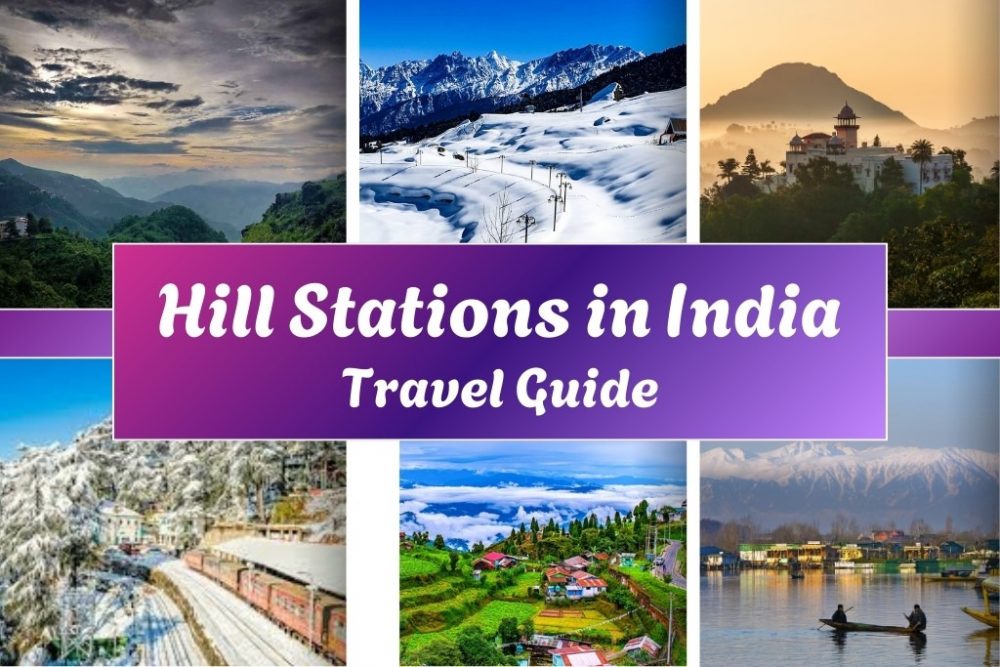
A hill station in India is not defined only by elevation. It is defined by why people go there and how life feels once they arrive. Traditionally, hill stations developed as places where the climate was cooler, forests were dense, and daily life slowed down naturally.
During British rule, towns like Shimla, Mussoorie, Ooty, and Darjeeling were established as summer capitals and seasonal administrative centers. Over time, these places grew schools, hospitals, markets, and residential neighborhoods, which is why many hill stations today function both as tourist destinations and as permanent towns.
People continue to prefer hill stations over beaches or deserts because hills offer:
- Consistent relief from heat
- Walkable terrain instead of open exposure
- Predictable weather patterns
- A quieter, enclosed natural setting
For many travelers, hill stations feel restorative rather than stimulating, and that difference matters.
Geography, Altitude, and Climate of Hill Stations in India
Most hill stations in India are located along major mountain systems, primarily:
- The Himalayas in North and Northeast India
- The Western Ghats and Nilgiri Hills in South India
States like Himachal Pradesh, Uttarakhand, Jammu and Kashmir, Sikkim, West Bengal, Tamil Nadu, Kerala, and Karnataka naturally host the highest number of hill stations due to their terrain.
The average altitude of Indian hill stations usually falls between 1,000 and 2,500 meters, though some sit much higher. Altitude directly affects climate. As elevation increases:
- Summers remain mild
- Winters become colder
- Snowfall becomes possible in higher Himalayan regions
- Nights cool down sharply even in summer
Most hill stations experience three dominant seasons: pleasant summers, cold winters, and a strong monsoon. Monsoon brings greenery but also increases the chances of landslides, especially in areas with heavy construction or deforestation. This is why hill travel during rains is more about caution than avoidance.
What Makes a Hill Station Different from Hill Villages or Mountain Towns
Not every place in the mountains is a hill station. The difference lies in planning and purpose.
Hill stations generally have:
- Better road connectivity
- Tourism-driven infrastructure
- Hotels, homestays, and transport services
- Medical and civic facilities
Hill villages, on the other hand, are usually:
- Agriculture or livestock based
- Locally governed and culturally inward
- Less dependent on tourism
- Slower to adapt to outside influence
This is why two places at the same altitude can feel completely different in rhythm and lifestyle.
Popular, Underrated, Luxury, and Budget Hill Stations in India
Popular hill stations like Shimla, Manali, Mussoorie, Nainital, Ooty, and Darjeeling attract crowds because they are easy to reach and predictable to plan. These places work well for families, short vacations, and first-time hill travelers.
Underrated hill stations appeal to people who want fewer crowds and longer stays, such as:
- Kalpa and Tirthan Valley in Himachal
- Munsiyari in Uttarakhand
- Ziro in Arunachal Pradesh
- Chikmagalur in Karnataka
Luxury hill stations usually combine scenery with privacy and premium stays. Budget-friendly hill stations exist almost everywhere if you choose homestays, hostels, or local hotels, which also makes many hill towns popular among students and backpackers.
State-Wise List of Hill Stations in India
India’s hill stations are spread across different mountain systems, and each state offers a distinct hill experience shaped by geography, climate, and culture.
Hill Stations in Himachal Pradesh & Uttarakhand
Himachal Pradesh and Uttarakhand form the core of Himalayan hill tourism in India. These states are known for well-developed hill towns, easy accessibility, and a mix of leisure travel and adventure.
Popular hill stations in these states include:
- Himachal Pradesh: Shimla, Manali, Dalhousie, Kasol
- Uttarakhand: Mussoorie, Lansdowne, Chopta, Auli
These destinations suit families, first-time hill travelers, trekkers, and seasonal tourists alike. Auli and Chopta are near the world famous national park, Valley of Flowers NP, which can be included in the itinerary.
Hill Stations in Jammu & Kashmir
Jammu and Kashmir is known for high-altitude hill stations with strong alpine character, long winters, and regular snowfall.
Notable hill stations include:
- Gulmarg
- Pahalgam
- Sonamarg
These places are especially popular for winter travel, snow activities, and scenic mountain landscapes.
Hill Stations in Eastern India
Eastern India’s hill stations combine mountain scenery with strong cultural identity and colonial-era influence.
Key hill stations include:
- West Bengal: Darjeeling
- Sikkim: Gangtok
Arunachal Pradesh is emerging as a quieter hill destination, offering less urbanized and culturally rich towns such as:
- Tawang
- Ziro
These regions appeal to travelers looking for authenticity and fewer crowds.
Hill Stations in the Western Ghats
The Western Ghats host some of the most scenic and green hill stations in India, known for tea gardens, coffee estates, wildlife, and monsoon beauty.
Major hill stations include:
- Maharashtra: Lonavala, Mahabaleshwar
- Tamil Nadu: Ooty, Kodaikanal
- Kerala: Munnar, Wayanad
- Karnataka: Coorg, Chikmagalur
These hill stations are ideal for relaxed travel, road trips, couples, and long stays close to nature.
Even states like Rajasthan, Madhya Pradesh, and Odisha have smaller hill stations such as Mount Abu, Pachmarhi, and Daringbadi.
Best Time to Visit Hill Stations in India
There is no single best season. The right time depends on what you want.
- Summer: Best for escaping heat, but also the most crowded
- Monsoon: Lush landscapes with travel risks
- Autumn: Clear skies, fewer tourists, stable weather
- Winter: Cold temperatures, snow in select regions, quieter towns
Hill stations are most crowded during school holidays and long weekends, while off-season travel often offers better prices and more peaceful experiences.
Reaching and Moving Around Hill Stations
Most hill stations are reached by road after connecting via nearby railway stations or airports. Very few have direct rail access.
Travel realities to keep in mind:
- Roads are generally safe but require patient driving
- Fog, sharp curves, and narrow stretches are common
- Public transport exists in popular towns
- Remote areas may require private or shared taxis
Special permits are required only in certain border regions, such as parts of Arunachal Pradesh and Sikkim.
Staying, Eating, and Daily Life in Hill Stations
Accommodation options in hill stations include:
- Budget hotels and guesthouses
- Homestays with local families
- Hostels for students and backpackers
- Luxury and eco-friendly resorts
Food is usually simple and regionally influenced. Vegetarian options are widely available, especially in Himalayan regions. Cafes have become common in many hill towns, particularly those popular with younger travelers.
Life in hill stations is quieter and community-driven. Languages, clothing, and routines vary by region, but tourism has reshaped many towns, bringing both income and pressure on resources.
Sightseeing, Activities, and Nature Experiences
Hill stations focus more on experiences than monuments. Common attractions include:
- Viewpoints and forest trails
- Lakes and waterfalls
- Temples, monasteries, and churches
- Colonial-era buildings and markets
Adventure activities like trekking, camping, paragliding, skiing, rafting, and wildlife safaris usually lie outside town limits. Many hill stations sit close to national parks and birding areas, making them rich in biodiversity.
Safety, Health, and Environmental Reality
Hill stations are generally safe for tourists, including solo travelers, when basic precautions are followed. Altitude sickness is uncommon in most hill stations but can occur at higher elevations if ascent is rushed.
Things travelers often underestimate:
- Cold nights even in summer
- Limited medical facilities in remote areas
- Seasonal water shortages
Tourism has boosted local economies but has also strained ecosystems. Waste management, water scarcity, and unchecked construction are real challenges, making responsible travel increasingly important.
Living, Working, and the Future of Hill Stations
Permanent living in hill stations is possible and increasingly common among retirees and remote workers. However, long-term living requires realistic expectations around:
- Healthcare access
- Internet reliability
- Seasonal isolation
- Cost of essentials
Many hill stations are becoming overcrowded during peak seasons, pushing travelers toward lesser-known destinations. Climate change is already altering snowfall patterns, water availability, and forest health, which will shape how hill station tourism evolves in the coming years.
Final Thought
Hill stations in India are not meant to impress instantly. They grow on you slowly. The right hill station feels less like a destination and more like a pause in life.
Most disappointments happen when travelers choose popularity over suitability. When chosen thoughtfully, hill stations stop feeling like tourist spots and start feeling like places you could return to.
That is why people continue to search for hill stations in India, not for novelty, but for balance.