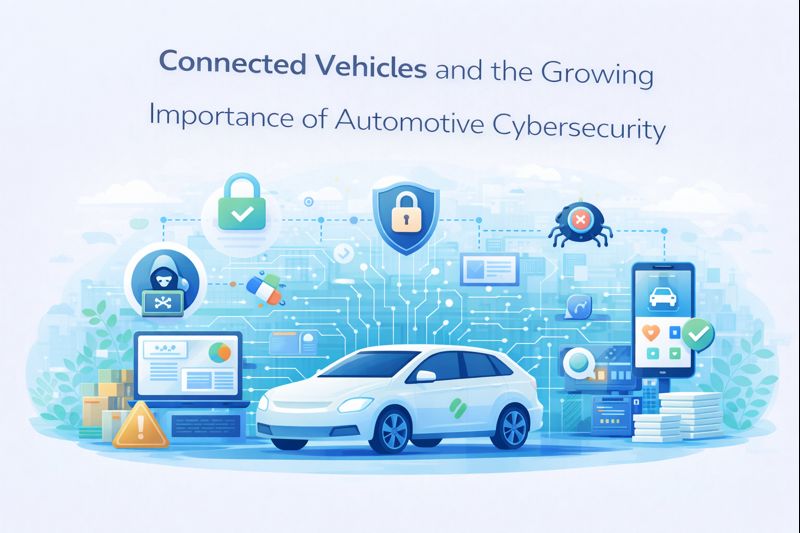
Cars are not just cars anymore. They are computers on wheels. Think about it. Your car probably connects to your phone, updates its software over Wi-Fi, and can even call for help if you get into an accident. Pretty amazing, right? But here is the flip side. Every connection also opens a tiny digital door, and that is where things get a little complicated.
As vehicles get smarter, they are also becoming bigger targets for hackers. Automotive cybersecurity is no longer just a tech buzzword. It is swiftly becoming as crucial as seatbelts and airbags.
From Simple Machines to Smart Systems
It was not that long ago when the most advanced tech in your car was a CD player or cruise control. Now, we have sensors that read road signs, GPS systems that talk to satellites and cars that practically drive themselves. Some models can even pay for parking or tolls automatically.
All this convenience depends on constant connectivity. Your vehicle sends and receives information all the time, such as location data, diagnostics, entertainment streams, and even personal info from your phone. It is basically part of a massive network, and while that is great for drivers, it is also a dream come true for cybercriminals.
The scary part? Most people do not even think about it. You would never leave your laptop unprotected, but millions of drivers are zipping around in connected vehicles that have never had a single cybersecurity update.
The Rise of Vehicle Hacking
Now, hacking a car might sound like something from a spy movie, but it has already happened in real life. A few years ago, security researchers remotely took control of a Jeep to prove a point. They could change the radio, activate the windshield wipers, and even cut the engine, all from a laptop. It was a controlled experiment, sure, but it got the world’s attention.
Today, the threats are more sophisticated. Cybercriminals can focus on a vehicle’s communication networks or the cloud platforms that oversee connected functionalities. It’s not solely about managing the vehicle. Sometimes the goal is stealing valuable data, like your GPS history or payment information.
And as cars start talking to each other through V2V or vehicle-to-vehicle systems, the risks multiply. A single weak point in that chain could possibly impact thousands of vehicles.
How the Industry Is Responding
Fortunately, car manufacturers are not idly waiting for catastrophe. They are developing comprehensive cybersecurity teams dedicated to evaluating & protecting connected vehicles. Security audits, ethical hacking initiatives, and software encryption are now integral to the design process rather than being merely an afterthought.
Over-the-air updates are another big step forward. Instead of waiting for a recall, manufacturers can now patch vulnerabilities remotely, just like a smartphone update. It is faster, cheaper, and far safer.
But it is not just about tech. Working together has become essential. Automobile manufacturers are exchanging threat information & collaborating with cybersecurity companies to outpace attackers. In this game, no one wins by keeping secrets.
The Role of Regulation
Governments are getting involved as well. The United Nations & the European Union have implemented cybersecurity regulations for vehicle manufacturers. These rules require companies to monitor threats throughout a vehicle’s lifecycle, not just during production.
It is a good move because modern cars are not static machines anymore. They evolve. New software, new updates, new vulnerabilities. Regulations are helping ensure that manufacturers keep security top of mind long after the car leaves the showroom.
Why It All Matters
At the end of the day, this is not just a tech issue. It is a safety issue. When vehicles are connected, cybersecurity becomes as critical as brakes or steering. A single breach could lead to data theft, financial fraud, or in the worst cases, physical danger.
The good news is that the auto industry is learning fast. With every new model, cars are becoming not just smarter but also more secure. And that is how it should be.
The next time your car updates its software overnight, do not ignore it. That quiet little update might just be the thing keeping you safe on the road.