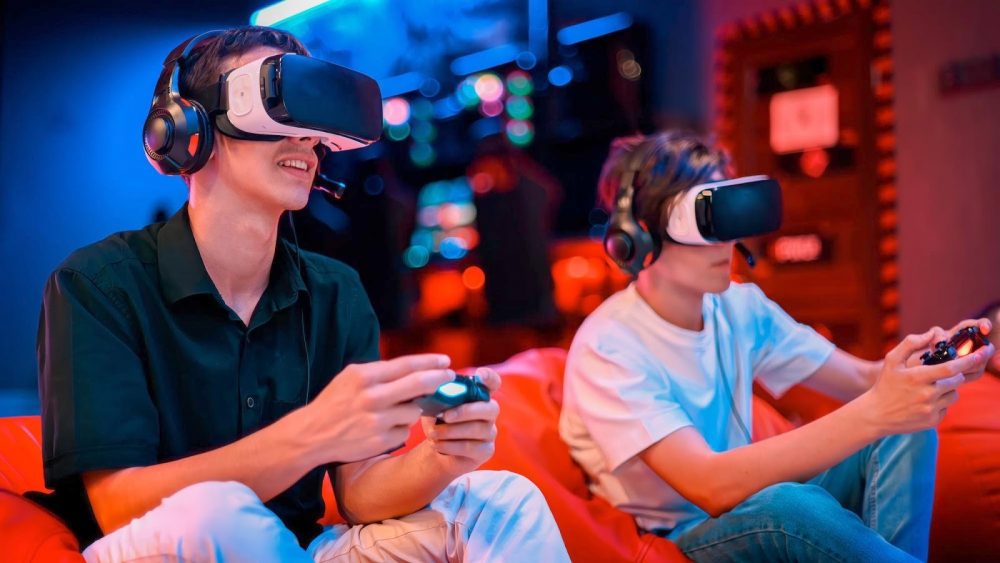
Virtual reality (VR) gaming has transformed from a science-fiction dream into an ever-growing niche in the gaming market. As traditional esports remain the mainstay for global reach, VR is slowly staking its own ground in competitive gaming, and platforms such as Erone will continue to innovate even further. A promising and transformative future lies ahead for VR gaming in the competitive arena with continued technological innovations, increasing prevalence of community engagement, and investment.
In this article, we will discuss how VR is transforming competitive gaming, the opportunities presented by VR, and the challenges it must conquer to be an esports powerhouse.
The Rise of VR in Competitive Gaming
Competitive gaming was born, an industry that exploded over the last decade and now attracts millions of viewers and generates billions in revenue. Now VR gaming is coming to the table, a wholly different experience than traditional screen-based esports. VR, however, differs from traditional games as players must translate their movement into the virtual environment rather than just use a controller or keyboard.
It is this special feature that has already started defining competition. Games like Beat Saber, Population: One, and Breachers have established use cases with strong competitive scenes: tournament organizing is global at this stage.
While VR esports might still be niche, they’ve ceased to be experimental. While the aforementioned VR game developers are preparing for the competitive future, community-driven leagues and events have already shaped this landscape at a level that proves that we should take VR as a serious competitor among all the esports chaos.
Immersion as a Competitive Advantage
Immersion is one of the most defining factors of VR gaming. And players are not merely puppeteering characters; they’re bodies moving inside the game world. This amount of interaction adds another layer of competition to the mix, one that extends beyond reflexes and strategy.
The role of physical fitness, coordination, and spatial awareness is critical in VR esports. Players have to train their bodies just as much as they do their minds, making virtual reality competitions more active and strenuous. The team aspect, synergy, and vibrancy of VR gameplay create a fusion of play like no other traditional esports have.
For audiences, immersion alters the act of viewing itself. One possible way forward is in VR tournaments, where spectators can be present within the game world and see the action through the player’s eyes. This transition may reshape how fans connect with competitive gaming.
Technological Advancements Driving Growth
The expansion of VR in competitive gaming relies on technology development. Over the last couple of years, VR hardware has grown increasingly sophisticated, affordable, and easy to use.
Modern headsets boast higher refresh rates, better resolution, and inside-out tracking systems, which means no more external sensors. These improvements promote more precise gameplay and less latency, which are essential for competitive equity.
Advances in emerging technologies deliver new levels of immersion like haptic feedback, motion tracking, and full-body sensors. Players can now feel the actions of the game, auto-react, and perform complex movements with precision.
Cloud VR gaming is also a big development. Cloud technology is opening the previously niche field of competitive VR to a broader audience by enabling users to stream gaming VR experiences without costly equipment.
The Role of Community and Grassroots Esports
VR esports also differs from traditional esports, which are typically driven by large publishers and sponsors; VR-based competitive play, in some cases, is powered by dedicated communities. We are building a competitive home for these enthusiasts and those who want to write for us video games, with organizations like the VR Master League (VRML) hosting tournaments while creating competitive structures and promoting player engagement.
There are advantages and limitations to this grassroots approach. On the one hand, it provides for organic and innovative growth. Conversely, it does not have the economic support and worldwide infrastructure of traditional esports systems.
However, this is gradually changing. VR esports are slowly starting to gain recognition from sponsors, hardware companies, and streaming platforms. Bigger investments are set to bring a more formal and professional competitive play scene.
The Emergence of VR Tournaments and Events
We are seeing VR competitions slowly make their way from small one-off events to a more structured kind of tournament with actual prize pools. According to industry reports, VR tournaments have started to turn into real-life events and become favorites for both players and spectators.
Often in these phenomena, such events occur in physical arenas and the surrounding virtual environment, a seamless hybrid competition. Players compete in real spaces, and their actions are mirrored in the virtual world, giving viewers a unique spectacle.
We can expect to see purpose-built VR esports venues with superior tracking systems and immersive displays. If official, professional tournaments are in play at these venues, this could be a crucial step towards VR esports being more commonly accepted on the international stage.
Integration with the Broader Esports Ecosystem
The future of VR gaming in the competitive space is intricately linked to its integration into the larger esports ecosystem. The same goes for traditional esports-only titles, which still retain the largest viewer base, but VR is going to complement existing platforms rather than replace them.
It could give rise to hybrid competitions where VR and non-VR players compete in the same environments connected with one another. We can also see big esports organizations moving into the VR world, building dedicated teams and leagues.
The possibility of VR esports being included in global events, such as the planned Olympic esports competitions, highlights its growing importance.
VR is emerging as the industry’s next evolution, where there will be new formats and experiences that regular esports can’t compete with.
Challenges Facing VR Competitive Gaming
While virtual reality holds great promise for gamers, there are challenges to VR that need to be resolved before it can reach the same level as other gaming platforms in terms of popularity.
Cost is one of the biggest barriers. High-quality VR hardware is still very pricey, and so not something that everyone can get. It limits the potential player base and hampers the development of competitive ecosystems.
Another challenge is physical fatigue. VR is inherently different from traditional gaming in the fact that it demands constant movement for an extended period of time, which can be tiresome during long sessions. This begs the question of player endurance and how viable this would be for long tournaments.
Latency and connectivity problems can become major roadblocks. Competitive gaming is all about timing, and even the slightest of delays can negatively impact performance. Fair competition requires stable, low-latency connections.
Lastly, there are no common regulations/rules and common formats for competitive frameworks. For that reason, it is up to developers and organizers to collaborate on balanced and fair playing fields for those players.
The Impact of AI and Personalization
AI is becoming an integral part of future VR gaming. AI can improve gameplay through adaptive environments, intelligent enemies, and personalized experiences.
Research indicates that through applying AI to VR environments, games can become more realistic, more engaging, and facilitate interaction between the player and the game.
AI could also help you optimize your gaming skills and strategy, for example, by providing analysis of previous games or suggesting changes during competitive matches. There are also suggestions for personal coaching systems that analyze each player’s game and provide statistics and recommendations of how they can improve.
The inclusion of AI can bring VR esports to new heights, more advanced and competitive than ever.
The Future Vision: VR Esports in 2030 and Beyond
Then, on the horizon, there are exciting prospects for VR gaming in this competitive segment. By 2030, esports may be integrated into fully immersive experiences where players and fans share the same virtual space.
Augmented reality (AR) and VR technology may become ubiquitous in hybrid arenas where AR-enhanced audiences can “enter” matches, experiencing gameplay from multiple vantage points.
The VR gaming market is still showing robust momentum, now valued in the billions. This will help broaden the player base considerably as technology continues to become more affordable and accessible.
They are also forming alongside larger movements like mixed reality or wearable technology. The end of VR as we know it: Some companies are pivoting to AR and hybrid experiences, signaling that the future of competitive gaming may not be all extremes in an HMD, but more than one mode of immersive tech.
Conclusion
VR gaming has a bright future ahead of it as it works its way through this competitive landscape. Although there are some hurdles, including cost, accessibility, and standardization, it has the potential to change competitive gaming forever.
Esports: Unique competitions through a blend of sportsmanship, strength, and speed in VR games with different physical abilities. With growing technology and investment, VR esports will continue to become more structured, accessible, and recognized.
While it might take some time before VR becomes as popular as traditional esports, the trajectory seems to be towards steady growth and innovation. The rise of VR gaming could forge a new era in esports, one where competing, observing, and navigating the landscape takes on an entirely different meaning.