You know that wobbly old timber chair gathering dust in the spare room? Or maybe it’s a faded Victorian cabinet you inherited. See, we all love and want to have a bit of history in our home,
But, there is always that ever creeping doubt in our mind, that by restoring them, we will actually destroy their authenticity and worth.
It’s a serious concern. Antiques aren’t just somewhere to park your backside or store your plates; they’re historical artefacts. A botched repair job can absolutely tank the market price. But here’s the good news: getting sensitive, professional work done doesn’t just protect your investment. More often than not, it actually enhances the monetary and sentimental value of your treasured pieces.
Connection Between Condition, Authenticity, and Value
If you think it’s an interesting question to figure out, the question is: How do experts know the actual worth of a piece of furniture?
When an appraiser casts their eye over your family heirloom, they’re digging into its history, rarity, and, crucially, its condition. A few gentle scuffs? That’s just character. But severe issues like a busted leg, loose joints, or nasty water stains? That’ll drag down its appeal and structural stability right quick.
The real value of an antique lies in its original craftsmanship and design. Any fix needs to respect the original maker’s vision to keep the authenticity totally intact.
How Proper Restoration Preserves Value
This is exactly where proper furniture repairs enter the picture.
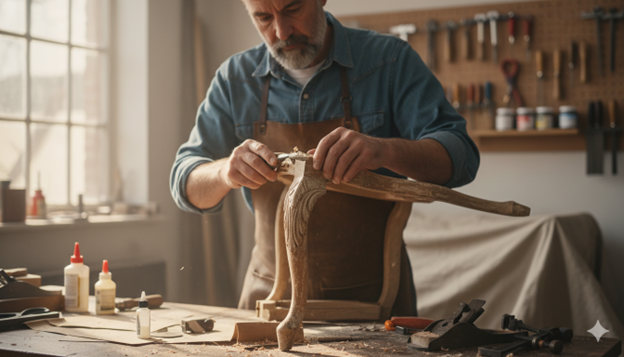
A skilled restorer will tackle the structural wobbly bits first. They’ll use traditional joinery to sort out loose mortise and tenon joints without mucking up the timber’s integrity.
Then comes the aesthetic side of things. Think traditional French polishing or painstakingly matching wood veneers. Each step pulls out the character buried under years of wear. Honestly, these pieces were never built just to gather dust in display cases. Once cared for, they settle into daily use – stronger, safer, living longer right beside you.
Importance of Patina and Traditional Techniques
Now, let’s talk about ‘patina’.
It’s that gorgeous, natural surface wear that wood develops over decades. Serious collectors go absolutely wild for it. Stripping it back to bare timber is a massive rookie error, you’re basically wiping away its history and sending buyers running for the hills.
Authenticity is all about keeping to the traditional methods. Experts turn to genuine period materials, including natural hide glues. This dedication to heritage is equally vital when it comes to getting the right seat. However, merely putting a piece of cheap modern foam on an old armchair is a disaster; choosing the right upholstery material is really a must if you want to maintain its value. Conventional fillings, such as horsehair mixed with fabrics that are authentic to the era, will indeed always beat the synthetic ones.
Dangers of DIY and Poor Restoration
We’ve all been tempted at one time or another to grab a few sheets of strong sandpaper from the local hardware store and do a session of DIY.
Don’t do it.
Many times, a DIY attempt results in a lot more damage than good. Sanding excessively, coating the item with a heavy layer of modern polyurethane varnish, or simply using modern screws can permanently alter the original design. In fact, a badly done, rough job can completely wipe out the item’s history. Suddenly, it becomes less valuable and potential buyers will be scared off.
Knowing When to Restore vs. Conserve
So, what’s the best play for your specific piece?
If you are fortunate to have a museum-quality, highly significant historical artifact, “conservation” is the way to go. That means doing the bare minimum to stabilise it and stop it from falling apart, leaving the aesthetics alone.
However, in the case of functional family heirlooms, the priority is really furniture restoration, which is the most sensible option out of the two, as it will gently bring the piece back to a usable and attractive state. Then again, when something stands solid, wears its age well, and serves its purpose? Best call might simply be doing nothing at all.
Final Thoughts:
At the end of the day, leaving your furniture in expert hands protects your wallet, saves a beautiful slice of history, and makes the piece functional for modern living. Before you make any decision on furniture repairs for your antique treasure, make sure that you consult and take the opinions of a professional restorer. They can guide you in making well-informed decisions.