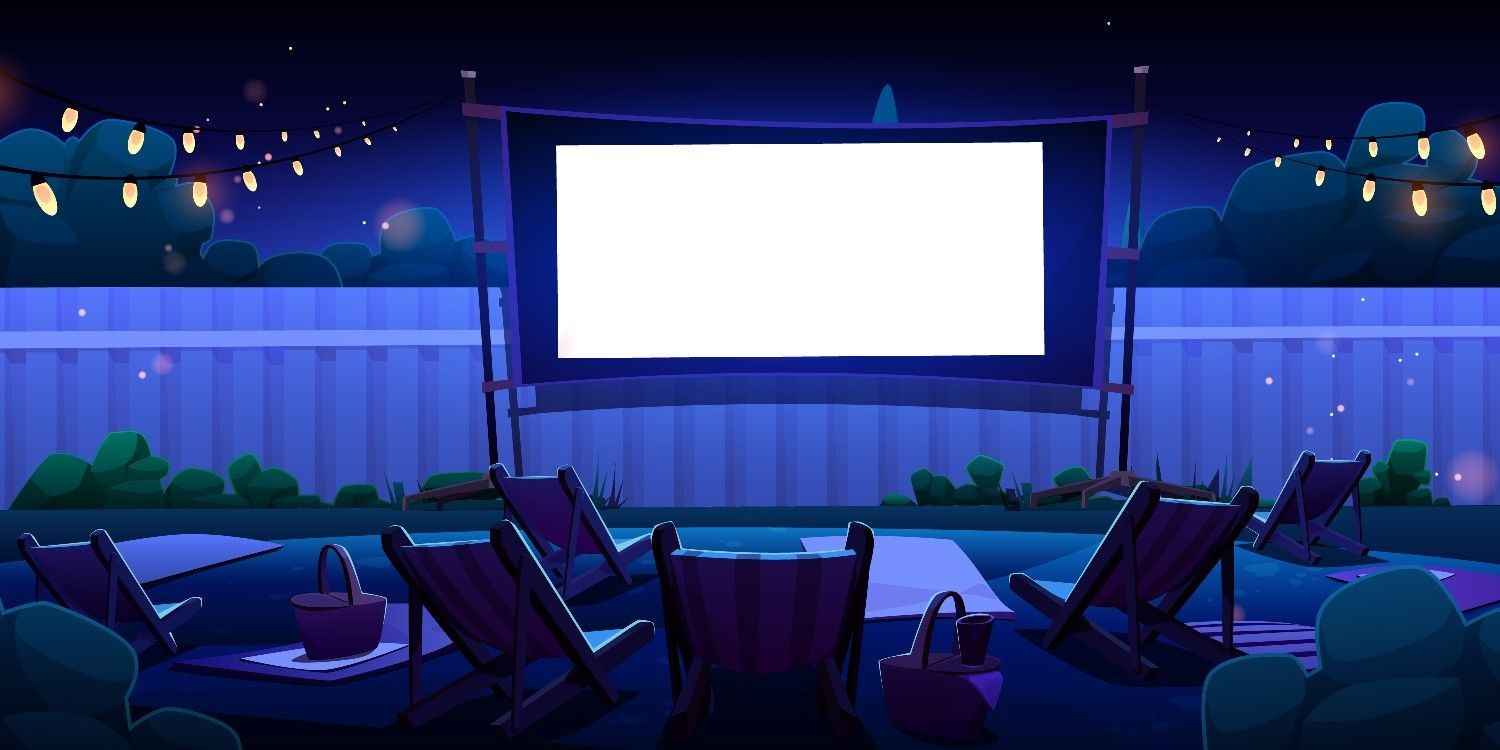
The quality of a projection system depends on the screen being used. Many customers focus on the projector; however, the screen is just as important in terms of image clarity, and brightness balance. Screens also enhance the overall viewing experience. Of the options available, fixed frame projection screens are the most popular for dedicated home theaters, conference rooms, and professional presentation rooms. These customers benefit from the negative of the frame as the projector is able to provide a flat, wrinkle-free display surface that is able to improve image quality in some advanced projector screens.
Unlike what you may find in a pull down or portable variety, fixed frame screens are installed permanently to a wall. The screen material is stretched over a rigid frame very tight which in turn produces a very consistent look. Also, this structure does away with waves or curling edges that which in turn improve the quality of the picture out of the projector. For the serious movie enthusiast or business looking for a premium display solution this type of screen provides very high reliability and picture stability.
Before you buy it is important to know how screen size, material, gain and room environment play into performance. What you choose has to go beyond what matches your projector. With proper planning you will achieve cinema like results instead of a less then impressive display.
Understanding Size, Aspect Ratio, and Screen Material
First, determine how big of a screen you want. This will depend on the size of the room and how close the viewers will be seated. If the screen is too big the viewers could get eye strain and a screen that is too small could mean it doesn’t give the immersive experience you are trying to achieve. It is also a good idea to measure the wall space and the position of the seats before you make a final decision.
Aspect ratio is also very important. For home theatres that will mostly be used for films, 16:9 is the most common ratio. For office presentations it could be 16:10 or 4:3 depending on the content. If you want to get the best resolution without any image cropping, you should try to get a screen that matches the aspect ratio of the projector. The material the screen is made out of will affect the brightness and contrast.
A lot of buyers for fixed frame projection screens look for a fabric that is perfectly tensioned so that it can avoid creating distortions in the image. The aluminum frame is able to keep the fabric flat at all times, which means the picture quality will always be good. Because of this, the screen is good for permanent installations that require visual accuracy.
The frame design is also important for aesthetics. The majority of models have borders that are coated in velvet which absorbs excess light and increases the contrast. The border black frame creates a greater focus to the image by showing where the limit of the screen is. In dedicated theaters, this little detail can greatly enhance the overall experience.
Installation and Room Considerations
In the case of fixed frame screens which are mounted to the wall installation is a key issue. The wall should be flat, stable and of sufficient size to fit the screen. Also pay attention to the screen’s position in relation to seating height which in turn will determine the viewing angle. We aim for the screen’s center to be at eye level when seated. As for lighting, while high quality materials may manage some ambient light, in general dark rooms do best for high contrast.
In a room with windows think about using black out curtains or controlled lighting to get the best performance. Also in home theater design acoustic elements play a role. Some top of the range models have acoustically transparent materials which in turn allows you to put the speakers behind the screen. This not only gives a more polished look but also a true cinema audio experience.
When buying from a reliable projection screen supplier, verify warranty conditions, quality standards for materials, and what kind of service is offered afterward. Good suppliers help with questions about compatibility, installation, and maintenance. Lower costs may sound tempting, but paying more for quality will bring greater durability and image performance constancy and worth the cost.
Fixed frame screens require less maintenance than their counterparts. Their screens are less mechanically worn than retractables because, while screens are kept tensioned, and remain stationary, the screen isn’t frequently moved. Cleaning of the screen material with the recommended tools and keeping dust off will keep the screen at its best.
Advantages Over Other Screen Types
With fixed frame projection screens, you can enjoy a number of benefits compared to pull-down or motorized models. To begin with, with permanently tensioned surfaces, screens can ensure uniform flatness, which is extremely important with 4K and higher resolutions. Even the tiniest surface wave can ruin fine detail in your images. In addition to this, durability is greater as there is a lack of moving parts. Over time, retractable screens can experience issues with curling edges, and mechanical problems. For this reason, fixed frame screens are ideal for long-term installations. And finally, consistency is an important factor to consider. As a result of the screens never being rolled up, the fabric will always keep the screens structural integrity, and will maintain the screens quality. For this reason, fixed frame projection screens are highly sought after for both dedicated home theaters and professional settings. The only thing potential buyers may want to consider is any limitation in the available space.
Conclusion
A great investment for those after premium image quality and long term reliability is a fixed frame projection screen. They have a tensioned surface, robust frame, and uniform flatness which in turn delivers a better view than what you get from portable or retractable options. In terms of choice of size, aspect ratio and material is key to getting the best results with your projector and room environment. Also important is the installation plan, light control and the supplier’s reliability. In home theaters, boardrooms and professional presentation spaces fixed frame screens do very well in terms of performance, durability and visual precision. With the right choice and installation they become the base of an excellent projection set up.