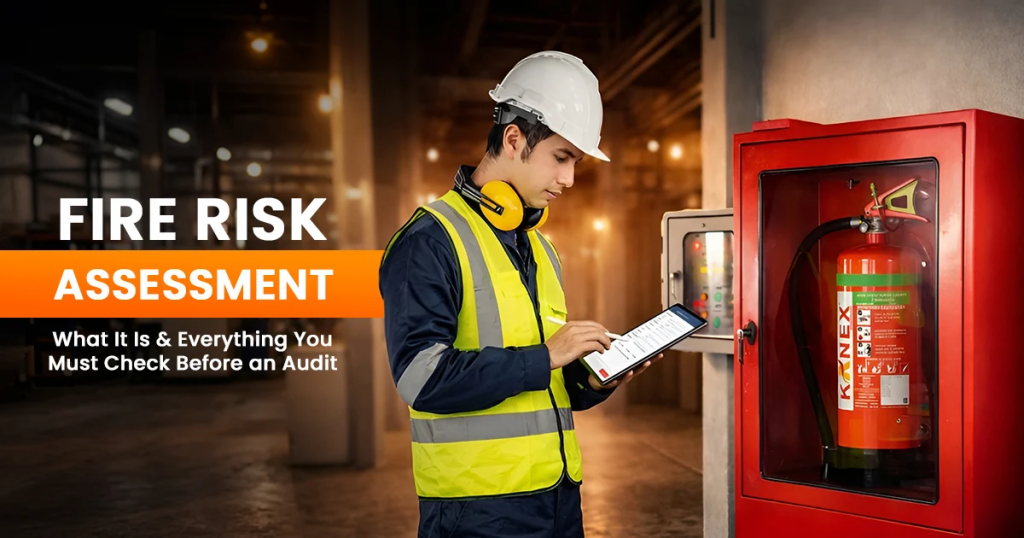
Fire doesn’t come with a warning. Most fires start because small things are ignored. A loose wire here. A blocked exit there. Nobody checks that fire extinguisher for years kept in the corner. And then, you hear about the fire, and the loss it caused.
This is why fire risk assessment is really important. Not for reports, not for files. But to catch danger before it turns into loss. If an audit is coming, or even if it’s not, you should know what to check.
What Is Fire Risk Assessment (FRA)?
A fire risk assessment (FRA) is a systematic evaluation of a building or workstation to check the potential fire risks. An FRA report also talks about the severity of a fire and determines the required safety rules to protect people and property. Every office, factory, warehouse, hospital, or school should provide this report. Anywhere people work or stay.
Why Fire Safety Risk Assessment Is Important
A fire safety risk assessment is essential because fires spread quickly, much faster than people expect. Without planning, people can easily panic and be at a loss for where to run or what to do. Equipment in your building may not be working, and exits may be blocked.
This is why a proper assessment helps you:
- reduce the chances of fire
- reduce damage if fire starts
- protect people inside the building
What You Must Check During a Fire Risk Assessment
A fire risk assessment checklist is not that complicated if you think about it. But it must be real and fair enough.
Fire Hazards and Risks
The first thing to check is fire hazards and risks. Because most fires start from these points only. Not from big explosions, but from small carelessness. And you should look for:
- flammable materials kept openly
- electrical wiring in bad condition
- machines producing heat
- waste, oil, dust, or chemicals lying around
Fire Fighting Equipment
Next, check fire fighting equipment. Your fire extinguishers must be:
- in the correct location
- easy to reach
- not expired
- showing correct pressure
If the extinguisher is blocked by boxes or furniture, there is no point in keeping it in your building. Also check fire suppression systems, hydrants, hose reels, and alarms. If something is installed but not working, it is a serious risk.
Emergency Exits and Evacuation Routes
Now, at this point, you have to check the emergency exits. They should always be open and visible. You should check if:
- Exit doors are locked or blocked
- Pathways are clear
- Staircases are usable
Fire Signs and Alarms
The fire signs in your building must be very clear. You should keep them higher so that everyone can read or see the signs in an emergency. Also, the fire alarms must be tested regularly. If the alarm doesn’t ring, people won’t know what is happening. These checks should not be one-time. Every few months, you should check again.
Also Read: Fire Extinguisher Signs and Symbols: Meaning, Types & Placement Guide
Role of Fire Safety Equipment in Managing Fire Risk
Fire safety equipment helps you deal with fire step by step. First, it warns you early. Then it helps control the fire. After that, it helps people move out safely. All this reduces damage and saves lives. It also helps you follow safety rules and insurance conditions.
Main roles of fire safety equipment:
- Smoke alarms warn you early
- Fire extinguishers and sprinklers control fire
- Exit signs and lights show escape paths
- Fire doors and blankets slow fire spread
- Training helps people act correctly during a fire
Conclusion
We want to make a request here that fire risk assessment is not a formality, but it must be your responsibility. If you know where fire can start, if exits are clear, if fire fighting equipment works, half the danger is already reduced. With proper fire safety equipment, you can consult with Kanex Fire Solutions Limited. We have a wide range of fire safety solutions, for different conditions.