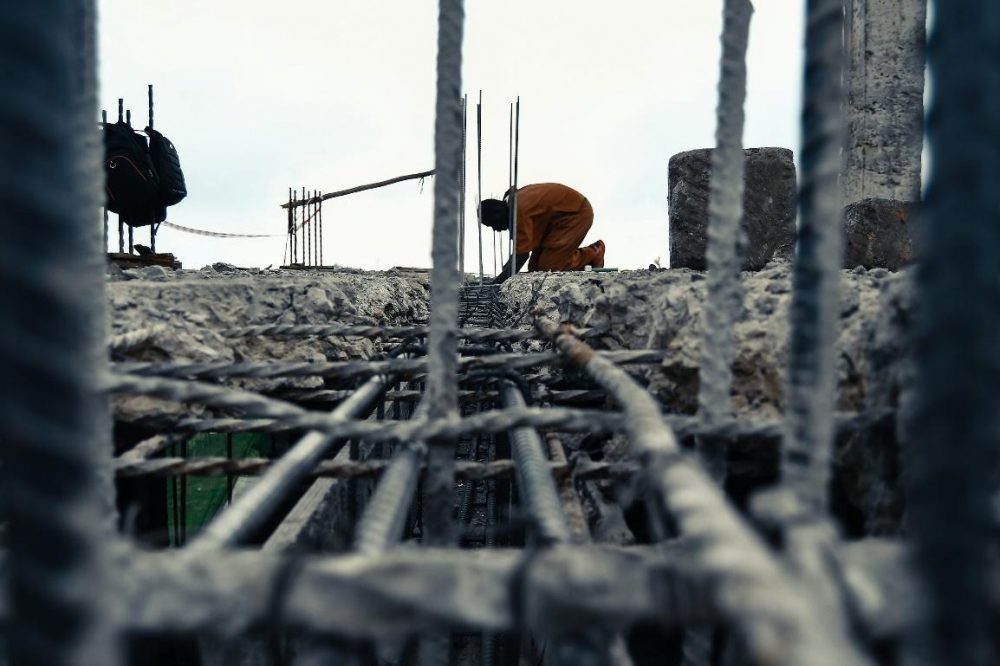
Construction chemicals continue to increase demand with residential and non-residential constructions because huge projects are now being executed. The construction chemical industry includes multiple elements which are concrete admixtures, flame retardants, adhesives and sealants, protective coatings, flooring compounds, grouts and anchors, waterproofing chemicals and additional products. According to the UN environment program, the global chemical sector increased by US$ 5 Tn in 2017 and is expected to double by 2030.
Type of Construction Chemicals:
- Adhesives and Sealants
Adhesives function as bonding agents which create bonds between surfaces through either mechanical or chemical methods. Their demand has increased with rising construction activities and modern building practices that favor efficient bonding solutions. Sealants fill joints and gaps to stop air, water and dust from entering while they enhance building protection against moisture and energy loss. They provide essential protection to buildings because they create enduring defense systems which maintain structural strength against severe weather conditions and high-humidity environments.
- Concrete Admixture
Concrete admixture contains some specific ingredients that add to concrete, which make it easy to blend with cement, sand and water. This chemical varies as per need, from solid powder to simple liquid additives. With this, it maintains the strength, longevity, workability, and color of concrete. There are two types of concrete admixtures such as:
- Mineral admixtures: Mineral admixtures are used to improve strength, workability and durability. Some part of the cement can be replaced with a concrete admixture due to its fine powder texture.
- Chemical admixtures: Chemical admixtures are specifically used to change the properties of concrete as per the requirement. The liquid or powder texture of chemical admixtures helps in blending the concrete.
- Flame Retardants
Flame retardants are the most demanded subtype of concrete admixture. According to the UN Environment Programmer, the consumption of flame retardants is expected to be US$ 16.6 Bn by 2030. By making fire to slow down it allows people to escape and reduce the damage to properties. It is used in various forms such as clothing, furniture, electronics, building material and others. This chemical depends on flame; when material burns, a chemical reaction occurs, which restrains fire from spreading. It contains non-flammable gases such as water vapor when bare the heat, cools down the material. The material of halogenated flame retardants contains bromine or chlorine which binds with the material to decrease flame intensity. The safer for humans non-halogenated flame retardants use phosphorus, aluminum, and nitrogen as their chemical components.
- Waterproofing Chemicals
The chemicals that restrain water from transferring to the roof, floor or surface are known as waterproofing chemicals. Waterproofing chemicals are further divided into: liquid-applied membranes, cementitious waterproofing, polyurethane membranes, integral waterproofing compounds, bituminous coatings and crystalline waterproofing.
- Cementitious waterproofing, a combination of water and powder, becomes a waterproof barrier for the surface.
- Liquid-applied membrane layer makes a waterproof and flexible layer.
- Crystalline waterproofing forms a crystal in the core of concrete which blocks water from transferring.
- Integral waterproofing compounds are added directly to the mixture during infrastructure development.
- polyurethane membranes are used for roofs and areas which are exposed to the weather. Material for this is stretchable and rubber like texture.
- Bituminous coatings are a semisolid substance which is poured on the surface, and over time, it becomes harder and forms a water barrier.
Protective coating is a specific layer applied to the surface to restrict rust, weather, fire, and chemicals from damaging things. Protective coating is further divided into polyurethane coatings, epoxy coatings, acrylic coatings, fire-resistant coatings, and anti-carbonation coatings. Epoxy coatings are semisolid, which protect the concrete, floors and metals from wear, moisture, and chemicals. Polyurethane and rubber-like texture blend flexibly on concrete, metal, and wood and protect from UV light, chemicals, weather, and abrasion. Acrylic coatings- for a shiny and smooth finish, acrylic coating is used, and has a watery texture that rapidly dries the liquid. Used for protecting walls or roofs from UV rays, water, and dirt.
According to Pristine Market Insights, the construction chemicals experience growth because of increasing demand for both residential and commercial building projects. The essential products which include concrete admixtures, waterproofing chemicals, flame retardants and adhesives and sealants, serve an important function through their ability to improve structural strength, safety and durability. The construction chemicals market will experience substantial expansion because modern construction methods and infrastructure development continue to progress, which creates demand for their innovative solutions that produce enduring and strong buildings.