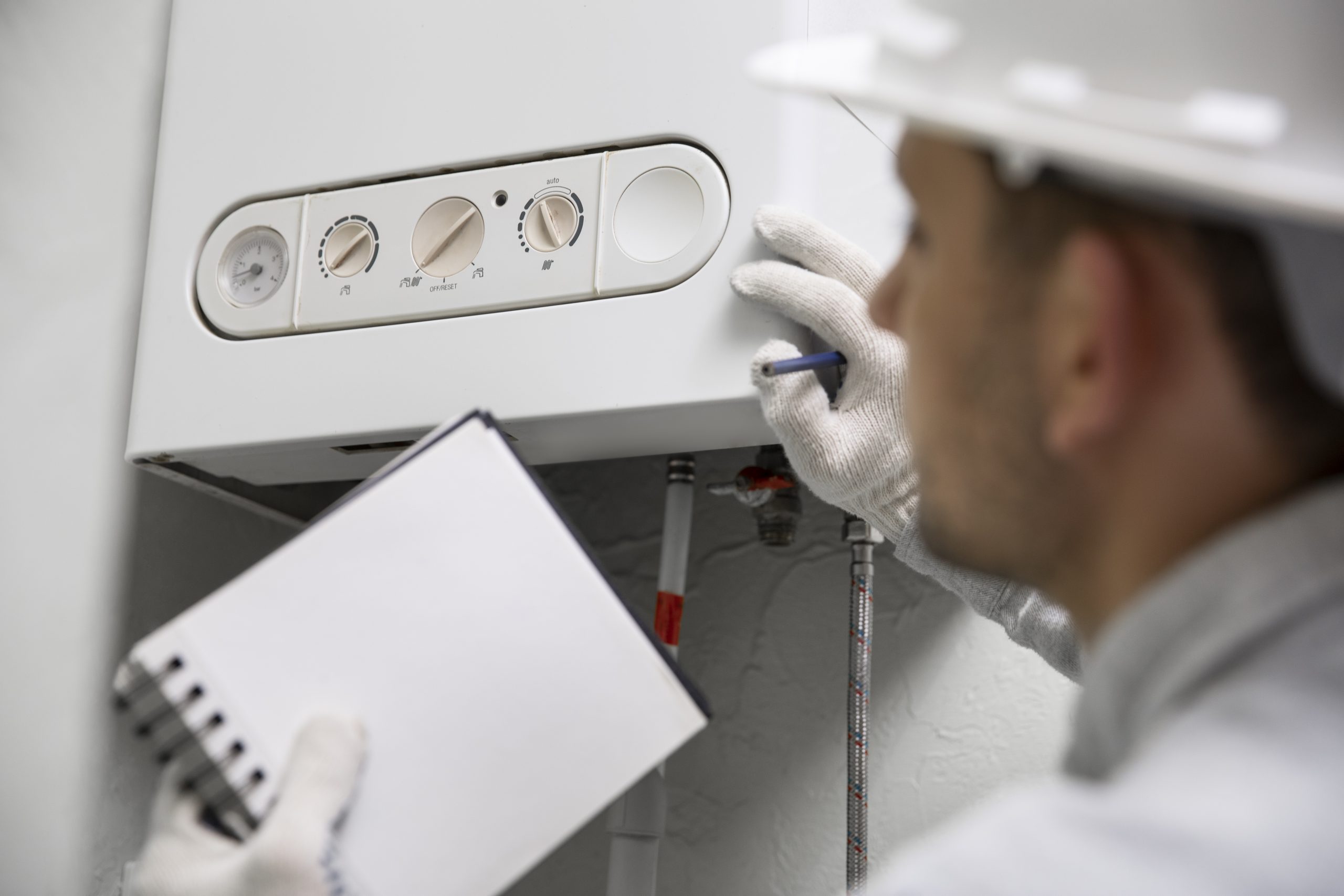
Is your old furnace on its last legs? When it’s time for a replacement, the first big question you’ll face is: gas or electric? The choice goes beyond the purchase price, affecting your wallet and your comfort for the next 15 to 20 years. To make a confident decision, it’s essential to understand the trade-offs in long-term costs, heating performance, and safety.
How They Work: The Campfire vs. The Hairdryer
While both types of furnaces warm your home, the way they generate heat is completely different. Think of a gas furnace as a tiny, controlled campfire. It burns natural gas to superheat a component called a heat exchanger. Your home’s air is then blown across this hot surface, delivering powerful warmth through your vents. This is called combustion heating.
An electric furnace, on the other hand, works more like a giant hairdryer. It uses electricity to heat up a series of large coils, similar to the glowing wires you’d see in a space heater. As air is forced past these red-hot elements, it warms up and circulates through your home. This process is known as resistance heating.
This core difference—burning fuel versus heating coils—is the root cause for all the other distinctions in cost, performance, and installation requirements.
The Sticker Price: Unpacking the Upfront Cost
Your first encounter with furnace costs is the sticker price—the total bill for the unit and its installation. In this initial showdown, electric furnaces almost always win. They are mechanically simpler and generally have a lower purchase price, making them the more budget-friendly option on day one.
Because an electric furnace doesn’t burn fuel, it doesn’t need a chimney or special vent for exhaust fumes. This straightforward design makes the unit less expensive and significantly reduces the labor involved in the cost to install the furnace.
A gas furnace, by contrast, has a higher initial price. The biggest potential surprise in the natural gas furnace installation cost comes if your home doesn’t already have a gas line. Running a new line from the street is a major job that can add thousands of dollars to your bill.
Even among gas models, a high-efficiency gas furnace costs more upfront than a standard-efficiency one because it uses advanced components to capture heat that would otherwise be wasted. However, the sticker price is only the first chapter in the story of what your furnace will truly cost.
Your Monthly Bill: The Real Cost to Run Your Furnace
While an electric furnace might win the upfront price race, the long-term running cost is a marathon decided by your monthly utility bills. The cost to run an electric furnace vs. a gas one is a local competition between your power company and your gas provider.
Figuring this out is easier than you think. You just need to compare the price you pay for each type of energy:
- Find your electricity bill and look for the price per kilowatt-hour (kWh).
- Grab your gas bill and find the price per therm.
- Generally, one therm of natural gas provides the same amount of heat as about 29 kWh of electricity. If your cost for one therm is significantly cheaper than your cost for 29 kWh, gas is likely the more affordable fuel for you.
Fuel price is only half the equation; you also have to consider efficiency, measured by its AFUE (Annual Fuel Utilization Efficiency). Explained simply, AFUE is the percentage of fuel that becomes heat in your home. An 80% AFUE gas furnace turns 80 cents of every dollar into warmth, while 20 cents are wasted. Electric furnaces are nearly 100% efficient, but that perfect efficiency often can’t beat cheaper fuel.
So, what’s the best furnace for a 2000 sq ft home? It depends entirely on your climate. In a cold region, a high-efficiency gas furnace’s lower running costs can save you hundreds each winter. In a milder area, those savings might not be enough to matter.
The Comfort Factor: Which Furnace Delivers a Cozier Heat?
Beyond your monthly bill, the type of heat each furnace produces feels noticeably different. A gas furnace, like a roaring campfire, generates intensely hot air, often between 120-140°F. An electric furnace, more like a powerful hairdryer, creates a gentler warmth, with air temperatures usually between 95-105°F. This impacts how cozy your home feels and how quickly it gets there.
That initial blast of hot air is a key point in the gas furnace pros and cons column. It feels powerful and can warm up a cold house very quickly, which is why gas is often considered better for cold climates. For homes in regions with harsh winters, the robust output of a gas system provides a rapid, reassuring warmth.
On the other hand, whole-home electric heating solutions offer a steadier, more consistent warmth. Since the air isn’t super-heated, the furnace might run in longer, gentler cycles, reducing hot-and-cold temperature swings. This steady heat can feel more comfortable to some and tends to be less drying, helping you avoid that classic static, dry-air feeling of winter.
Lifespan & Upkeep: Which Furnace Will Last Longer?
When investing in a major home system, you expect it to last. The average lifespan of a furnace running on gas is 15-20 years, while a well-maintained electric unit can often work for 20-30 years. The reason is simple: an electric furnace has fewer critical parts and doesn’t have to manage the stress that comes from burning fuel.
That mechanical complexity also dictates upkeep. A gas furnace requires an annual professional inspection—a critical safety check to clean burners, inspect for cracks, and ensure there are no dangerous gas or carbon monoxide leaks. This yearly service is a crucial part of weighing the long-term gas furnace pros and cons.
In contrast, the maintenance requirements for electric heaters are far simpler. Since nothing is burned, the annual safety inspection isn’t necessary. Upkeep is more like other large appliances: change the air filter regularly and have a professional check the electrical components every few years.
The Safety Question: What Are the Real Risks?
When it comes to furnace safety, the conversation almost always centers on one concern: carbon monoxide (CO). Because a gas furnace works by burning fuel, it produces this odorless, colorless gas. If the furnace has a crack or isn’t venting properly, CO can leak into your home. This is the primary carbon monoxide risk with a furnace.
Thankfully, modern gas furnaces are engineered with safety sensors that shut the system down if they detect poor ventilation. This is a key reason why the annual professional tune-up is so critical—it ensures these life-saving features are working correctly.
Electric furnaces offer clear peace of mind in this regard. Since they don’t burn any fuel, the risk of carbon monoxide is completely eliminated, making them a very safe furnace option for families. The main hazard is an electrical fire from faulty wiring, which is why professional installation is still important.
Wait, What’s a Heat Pump? The Ultra-Efficient Electric Option
Just as you’re considering electric heat, you might hear about another option: the heat pump. While it also runs on electricity, it works in a much smarter way. Instead of creating heat like a hairdryer, a heat pump acts like a refrigerator in reverse. It pulls existing heat from the outside air—even on a cool day—and simply moves it into your house. Moving heat is far more energy-efficient than making it from scratch.
The cleverest part is that it can work both ways. In the summer, a heat pump reverses the process, pulling heat from inside your home and moving it outdoors. That means a heat pump isn’t just a heater; it’s also your air conditioner. This two-in-one capability is a major selling point for whole-home electric heating solutions.
There is, however, one important catch in the heat pump vs. furnace comparison: climate. Because a heat pump relies on finding heat in the outdoor air, it becomes less effective as the temperature plummets toward freezing. In regions with mild winters, it’s a brilliant choice. For those in areas with long, harsh winters, a heat pump may need a backup furnace to take over on the coldest days.
Your Final Checklist: Which Furnace Is Right for You?
Choosing between a gas and an electric furnace comes down to matching the system’s strengths to your climate, budget, and home setup. This final checklist is designed to help you make that choice.
A gas furnace is likely your best bet if:
- You live in a cold climate with harsh winters.
- Your home already has a natural gas line installed.
- Low monthly heating bills are your top priority.
An electric furnace is a great fit if:
- You live in a mild or moderate climate.
- You don’t have access to a natural gas line.
- Lower upfront cost and simpler maintenance are more important to you.
Armed with this knowledge, you can contact an HVAC professional with confidence, prepared to select the perfect furnace for your home.