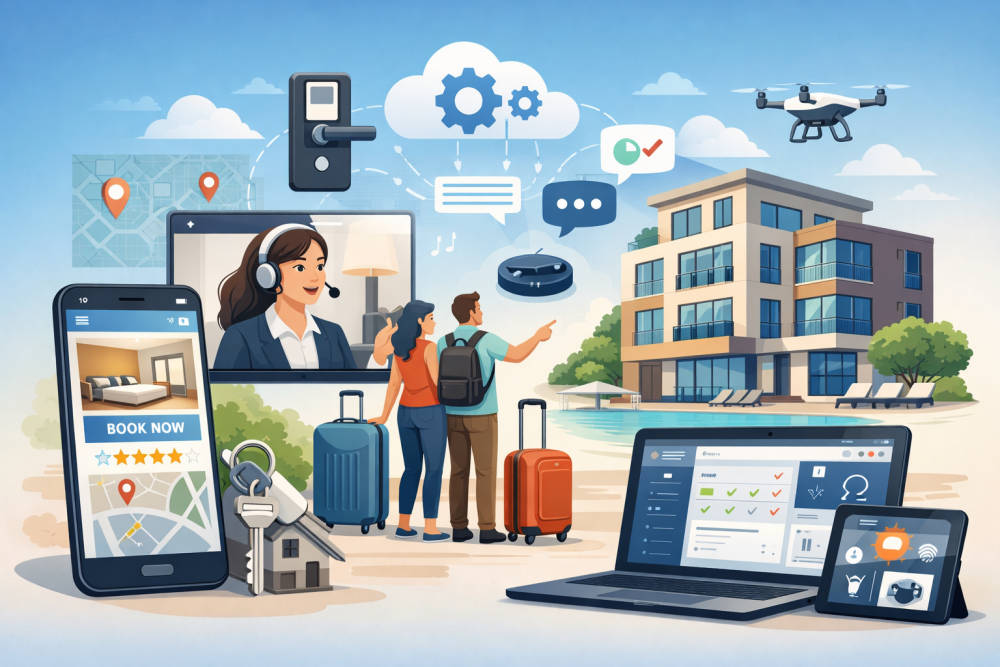
Many accommodation businesses start with basic hotel software and feel confident at first. Bookings come in, rooms are managed, and reports look fine. Over time, daily work becomes harder.
Teams switch between systems, maintain spreadsheets, and handle exceptions manually. What once felt efficient now feels slow.
This situation is common across hotels, serviced apartments, short-stay rentals, and hybrid accommodation platforms. The reason is simple. Most standard systems were created for older hotel models. Modern businesses work very differently today.
This is where Custom Hospitality Technology Solutions matter. This article explains why generic systems fall short and how custom hotel software helps modern teams work better at every level.
How Accommodation Businesses Work Today
Accommodation businesses no longer follow one fixed model. Teams have to deal with various types of properties, and they all have their own rules for booking and different guests’ expectations, all under the same brand name.
One well-known example is Marriott International, which operates traditional hotels, long-stay brands like Residence Inn, and apartment-style lodging through Marriott Executive Apartments all under one roof.
In similar modern businesses, teams deal with:
- Online bookings from many channels
- Mobile-first guest journeys
- Flexible check-in and check-out times
- Remote managers and on-site staff
- Short stays mixed with long stays
Older hotel management software assumed one front desk, one stay pattern, and fixed daily operations. That gap creates confusion and extra work for teams.
Why Standard Hospitality Software Platforms Create Problems
As businesses grow, software limitations become more visible.
Workflows Do Not Match Daily Reality
Most hospitality software platforms follow fixed processes. Teams often have to adjust their work to fit the system.
Common issues include:
- Manual handling of special bookings
- Separate tracking for long stays or corporate guests
- Repeated data entry across tools
- Delays between departments
This leads to errors and wasted time.
Systems Do Not Talk to Each Other Properly
Accommodation teams use many tools every day. Booking engines, payment systems, channel managers, and reporting tools must share information.
Problems appear when:
- Data updates are slow or incomplete
- Guest profiles differ across systems
- Reports do not match actual performance
Teams lose trust in the data they rely on.
Growth Makes Everything Harder
Adding new properties or expanding to new locations often means:
- Higher software costs
- More manual work
- Limited customization
- Dependence on vendor timelines
These challenges push businesses to look for better options.
What Custom Hospitality Technology Solutions Do Differently
The first step in developing Custom Hospitality Technology Solutions is to understand how the business functions, not how a system anticipates it will. Examining how custom-built systems are created from the ground up helps to clarify this distinction.
Built Around Real Operations
Before development begins, workflows are clearly mapped:
- How bookings are created and changed
- How guests interact before and during their stay
- How staff manage housekeeping and maintenance
- How extra services are sold
The software then supports these flows directly.
Flexible Structure That Grows With the Business
Custom hotel software is usually built in modules:
- Core systems manage rooms, bookings, and guest data
- Other tools connect through APIs
- New features can be added without replacing everything
This keeps the hospitality tech stack adaptable over time.
Guest Experience Improves When Systems Work Properly
When systems support operations correctly, guest experience improves naturally.
Personalization Becomes Easier
Custom Hospitality Technology Solutions allow teams to keep guest information in one place.
This helps with:
- Remembering preferences
- Handling repeat stays smoothly
- Sending relevant communication
Guests feel recognized without staff needing to search through systems.
Self-Service Without Losing Human Support
Mobile check-in, digital keys, and in-app requests reduce waiting time. Custom systems let businesses control how these features appear, so service still feels personal.
This balance helps both guests and staff.
Operations Run Better Across All Teams
Clear systems make work easier for everyone, not just managers.
Automation Removes Repetitive Tasks
Custom hotel software often automates tasks such as:
- Assigning housekeeping duties
- Tracking maintenance requests
- Updating room status
- Managing daily task lists
Staff spend less time coordinating and more time delivering service.
Clear Visibility Helps Better Decisions
Custom dashboards show what teams need to see.
Typical insights include:
- Occupancy levels
- Revenue performance
- Booking sources
- Property comparisons
This helps managers and junior teams understand priorities clearly.
Revenue Becomes Easier to Manage
The online accommodation booking market is valued at $361 billion in 2026 and is expected to reach $484 billion by 2031, making it clear why revenue systems need to scale without adding operational complexity.
Let’s explore how it becomes possible with custom tech solutions:
Direct Bookings Are Easier to Control
Custom Hospitality Technology Solutions allow businesses to manage pricing and offers clearly.
Teams can support:
- Loyalty pricing
- Long-stay discounts
- Region-specific promotions
This improves margins and reduces reliance on third-party platforms.
Extra Services Fit Naturally Into the Stay
Custom systems place add-ons at the right time in the guest journey. Guests see services when they make sense, which increases acceptance without pressure.
One well-known example is Airbnb, which provides extras like airport transfers, early check-in, and local experiences either at the time of booking or after confirmation.
Now let’s have a quick overview of the distinctions between traditional accommodation systems and custom solutions.
Standard Systems vs Custom Hospitality Technology Solutions
A simple comparison helps explain the difference.
| Area | Standard Hospitality Software Platforms | Custom Hospitality Technology Solutions |
| Workflow fit | Fixed processes | Matches real operations |
| Integrations | Limited or delayed | Flexible and scalable |
| Data access | Vendor-controlled | Fully owned by the business |
| Growth support | License-based | Configuration-based |
| Change speed | Vendor-driven | Business-controlled |
This clarity often helps teams understand why custom systems matter.
As platforms manage more bookings, payments, and guest data digitally, data protection becomes just as important as system performance.
Security and Data Handling Made Simpler
As accommodation platforms grow, they handle more sensitive information every day. This includes payment information, booking records, and internal business data.
When systems are scattered or outdated, protecting this data becomes harder and riskier.
Custom Hospitality Technology Solutions make security easier to manage by bringing data under one clear structure.
How custom systems improve security and data handling
- Centralized data management: All guest, booking, and operational data lives in one system, reducing duplication and gaps that often lead to errors or leaks.
- Built-in compliance support: Custom hotel software can apply region-specific data and payment rules, helping businesses follow regulations across different countries without creating separate systems.
- Stronger payment security: Secure payment handling is integrated into the platform, reducing reliance on multiple third-party tools and lowering exposure to security risks.
- Full ownership of business data: Guest insights, booking trends, and performance data remain with the business, not locked inside vendor platforms. This supports long-term planning and better decision-making.
How Businesses Build Custom Hospitality Systems
Building custom hospitality software is a business planning exercise that connects operations, guest experience, and long-term growth.
Successful projects follow a structured approach to avoid rework and confusion later. Here is a quick overview of the development process:
| Stage | What Happens |
| Goal Alignment | Business and operational goals are clearly defined before development starts |
| Workflow Mapping | Daily processes across bookings, guests, staff, and billing are documented |
| Tech Stack Planning | Core systems, integrations, and infrastructure are selected |
| Phased Development | Core features are built and launched first, followed by improvements |
| Team Adoption | Staff are trained with role-based access and simple interfaces |
| Growth Planning | System is designed to support new properties and regions |
Good decisions around infrastructure, data models, and integrations reduce future rework and keep systems stable as the business grows.
Where Custom Solutions Are Commonly Used
Custom Hospitality Technology Solutions support many models:
- Hotel groups managing multiple locations
- Short-stay rental platforms
- Mixed accommodation brands
Each case benefits from software designed around real needs.
Conclusion: Simple Systems Help Everyone Work Better
Accommodation businesses struggle when systems no longer match how they operate. Custom Hospitality Technology Solutions help teams work with clarity, reduce manual effort, and support growth without confusion.
If you are exploring custom hospitality systems or AI-driven improvements, RaftLabs helps travel and hospitality teams build scalable web, mobile, and AI solutions that simplify operations and improve guest experiences.