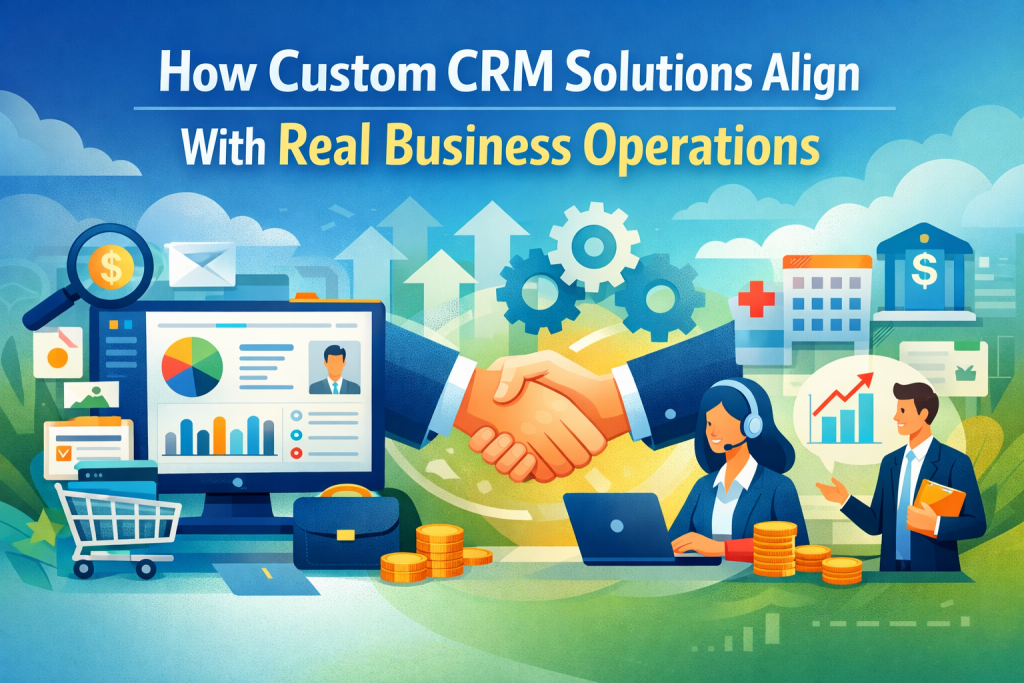
In the modern business world, companies are constantly looking for ways to make their operations more efficient, improve customer satisfaction, and boost revenue. One of the most effective approaches is to implement custom CRM solutions. Unlike generic CRM tools, which are often built for a broad audience, a tailored CRM aligns directly with a company’s unique operational processes and customer management strategies.
Why Off-the-Shelf CRM May Not Work
Many businesses start with standard CRM software because it’s quick to deploy and comes with many pre-built features. However, these generic tools often fail to address the specific needs of individual businesses. For example:
- A retail store may need detailed inventory tracking and loyalty program integration.
- A healthcare provider needs strict patient data management and appointment scheduling.
- A financial firm requires precise client portfolio tracking and risk reporting.
When software doesn’t match actual business processes, it creates inefficiencies. Employees may spend time entering redundant data, switching between multiple tools, or manually managing processes that should be automated.
This is why investing in a CRM software development company is crucial. Such companies can develop solutions specifically tailored to your business operations, ensuring every feature adds real value.
How Custom CRM Supports Real Operations
A custom CRM is designed after carefully analyzing a business’s workflow, customer journey, and growth objectives. Here’s how a custom CRM directly aligns with real operations:
1. Streamlined Sales Processes
Sales teams benefit from automated lead management, pipeline tracking, and follow-up reminders. A custom CRM can prioritize high-value leads, provide complete customer history, and reduce the chances of missing opportunities. Sales reps spend less time on manual work and more time closing deals.
2. Integrated Marketing Efforts
Marketing campaigns work best when they are based on real customer data. Custom CRMs can track campaign performance, segment audiences, and provide insights into customer behavior. Marketing teams can make data-driven decisions, improving engagement and ROI.
3. Efficient Customer Support
Customer satisfaction is closely linked to operational efficiency. Custom CRM solutions integrate support ticketing, chat systems, and knowledge bases. Support agents have access to a customer’s complete interaction history, enabling faster resolutions and more personalized service.
4. Smooth Internal Operations
A custom CRM eliminates manual work by automating repetitive tasks such as data entry, report generation, and workflow approvals. This alignment of software with business operations allows employees to focus on strategic initiatives rather than routine tasks.
Benefits of a Tailored CRM
- Efficiency: Automates routine processes, saving time and resources.
- Collaboration: Departments can share information seamlessly.
- Data-Driven Decisions: Provides analytics and reports based on actual operations.
- Scalability: Can grow with the business, adding new features as needed.
- Competitive Advantage: Enables personalized customer experiences and improved service quality.
Role of a Custom Software Development Company
A custom software development company plays a pivotal role in building a CRM that fits real business operations. Their process typically includes:
- Requirement Gathering: Understanding the company’s workflows, challenges, and goals.
- System Design: Mapping CRM features to actual business processes.
- Development & Integration: Building the software and integrating it with existing tools like ERP, accounting, or marketing platforms.
- Testing & Implementation: Ensuring the software works seamlessly in real-world operations.
- Support & Updates: Providing ongoing maintenance and updates to adapt to evolving business needs.
Choosing the right partner ensures the CRM is not only functional today but remains relevant as the business grows.
Real-World Applications
Retail
A retail chain may require a CRM that combines inventory tracking, customer loyalty programs, and sales analytics. A custom solution ensures all these systems work together, providing a complete view of operations while enhancing customer experience.
Healthcare
Hospitals and clinics need strict data management for patient records, appointment scheduling, and billing. Custom CRMs can integrate all these tasks while ensuring compliance with healthcare regulations, improving operational efficiency and patient satisfaction.
Financial Services
Banks and financial firms require precise tracking of client interactions, portfolio management, and regulatory reporting. A tailored CRM provides dashboards and reporting features that support compliance and informed decision-making.
Choosing the Right CRM Partner
Not all CRM software development companies are equal. When selecting one, businesses should look for:
- Proven experience in custom CRM development for similar industries
- Strong understanding of complex workflows
- A portfolio of successful projects
- Integration capabilities with existing software
- Commitment to long-term support and upgrades
A reliable partner ensures that your CRM not only meets current requirements but also supports future growth.
Future Trends in Custom CRM
The business environment is evolving rapidly, and CRMs must keep up. Key trends include:
- Advanced Analytics: Custom reports and insights based on actual operational data.
- Mobile CRM: Teams can access CRM tools anywhere, improving field sales and remote operations.
- Cloud-Based Systems: Scalable, collaborative, and accessible in real time.
- IoT & Device Integration: Tracking customer interactions through connected devices.
- Personalized Customer Experiences: Tailoring services based on individual customer needs and behavior.
Custom CRMs are well-positioned to incorporate these trends, as they are built to adapt to the unique needs of a business.
Conclusion
Aligning CRM solutions with real business operations is no longer optional. Generic software may work initially, but only a custom solution can provide true operational efficiency, better customer experiences, and scalable growth.
Working with a CRM software development company ensures that every process, from sales to customer support, is optimized for real-world operations. Investing in a custom software development company helps businesses turn operational data into actionable insights, automate workflows, and enhance collaboration.
Ultimately, CRM software development companies can create solutions that fit your business perfectly, helping you improve efficiency, satisfy customers, and stay competitive in today’s dynamic market.