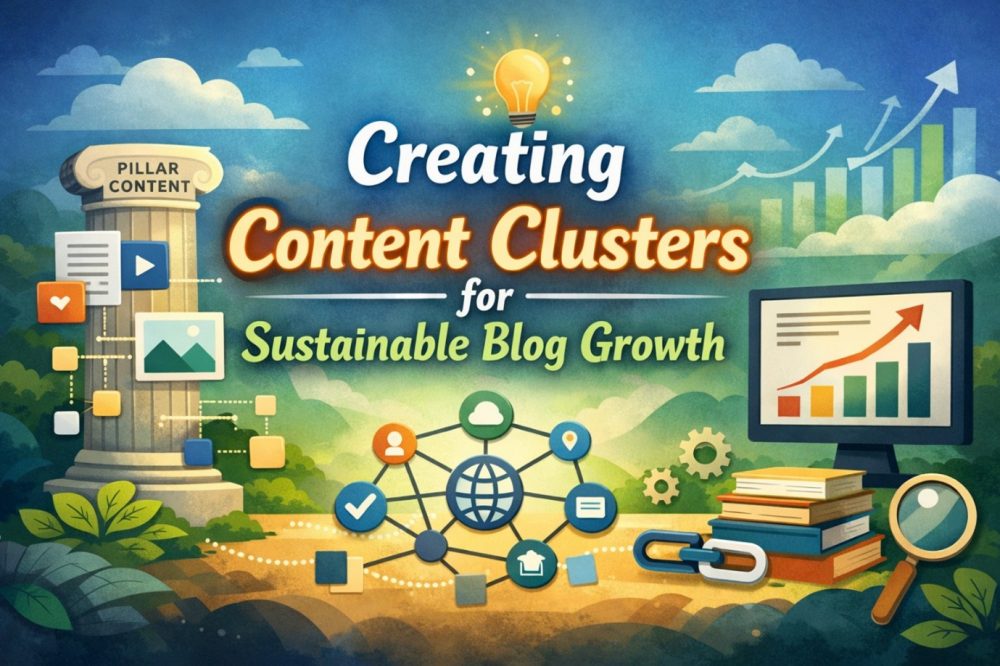
The pillar content lays the foundation, while the clusters generate the momentum. For a competitive digital world, it’s not possible to attain growth by simply posting individual blogs. This is where the concept of content clusters comes in. It’s a strategy in content marketing where a comprehensive pillar page on a broad topic is created, followed by a number of in-depth blog posts on the same topic. Unlike the conventional concept of blogging, where individual blogs are created independently without a particular format, the concept of content clusters focuses on the interconnected format. This format will not just provide a better user experience but also boost the SEO (Search Engine Optimization) performance. By using the content cluster strategy, the blogs will attain better topical authority, by providing information on a particular topic. Additionally, the content cluster format will enable search engines to easily crawl, understand, and rank your website, thus enhancing growth.
Role of Pillar Content
Pillar content is a detailed and in-depth content piece, which is considered to be the core of a content cluster. The main aim of creating pillar content is to discuss a wide range of topics in detail and link to other in-depth content pieces discussing specific topics. Moreover, it is used to inform the search engines about the topics, thereby improving the site authority. However, it is important to select a suitable topic for pillar content creation because the pillar content topic needs to be wide enough to allow for the development of other relevant content pieces. On the other hand, it needs to be specific to the niche and relevant to the audience.
Good pillar content can be identified based on its depth, clarity, and structure. This means that good pillar content must contain information for the readers, be clear, and have all the relevant content linked. For instance, good pillar content on the topic “Digital Marketing” must be linked to other relevant content on topics like “SEO,” “social media,” etc.
How to Organize Successful Content Clusters?
While creating an effective content cluster, it is not just about grouping similar content; it is about creating an effective framework that can be useful not just for users but also for search engines. Apart from enhancing your SEO, this will also make your blog an expert in the field.
Relevant Subtopics
Subtopics from the pillar content is derived from user intent, keywords, and even generative AI technology. It ensures that the content covers all the aspects of the main topic and meets the varied user requirements.
Logical Hierarchy
Organize the content in a logical manner where the pillar page acts as the main page, and the content cluster would be secondary. These secondary pages would be interconnected with the pillar page, helping the users navigate through all the content cluster posts.
No Overlap or Duplicates
Make sure that each article has a purpose and a keyword intent. In addition, it is important to note that you should not have similar information in two or more articles, as it will cause confusion for the user and will have a negative effect on the SEO ranking.
Consistency and Connection
Having a consistent tone and style in all the articles within your cluster will help you present a better reading experience for your users and will make your blog look more organized and professional.
Internal Linking & Keywords: The core of content clusters
Use of keywords and internal links are the core of effective content clustering. Identifying the main keywords for pillar content and secondary keywords for cluster content is the primary step in developing content clustering. Moreover, the use of long-tail keywords acts effective in targeting specific searches and improving the quality of traffic. However, to avoid duplication and maintain the purpose of the content, strategical use of keywords is necessary. Moreover, information, navigational, or transactional searches maintain the purpose and relevance of the content.
Another important factor in content clustering is the use of internal links. Moreover, use of best practices such as anchor text, ensures the success of internal links. Additionally, these links help search engine crawl the website and improves the performance of the website.
Impact of Content Clusters on Blog Growth
Content clusters play a crucial role in the promotion of sustainability of blogs, both in terms of visibility and engagement. This is because the blogger can easily understand which part of the content cluster is attracting more traffic and engaging users by simply looking at the statistics. Additionally, the monitoring of the keywords can be used to understand the performance of the individual content in the content cluster in terms of search engines, visibility and engagement.
Through the analysis of user behaviour (bounce rate and time on page), bloggers know the relevance and quality of the content. The more users spend exploring the content within the cluster between interlinked articles, the better the performance of the cluster. With the consistent updates of the content cluster, the chances of the content remaining accurate and competitive increase, which helps in boosting performance of the cluster.
In essence, a solid foundation and a loyal readership community are essentially created by well-organized content clusters for long-term growth.
Conclusion
The creation of content clusters is one of the best ways for bloggers to attain sustainable growth in the digital age. This strategy helps improve user experience and SEO rankings for the blog. This way, the reader will also benefit from the meaningful connections made within the content. With continuous optimization, content clusters will eventually get better over time. Finally, the best content cluster strategy will transform a blog into a reliable content ecosystem.