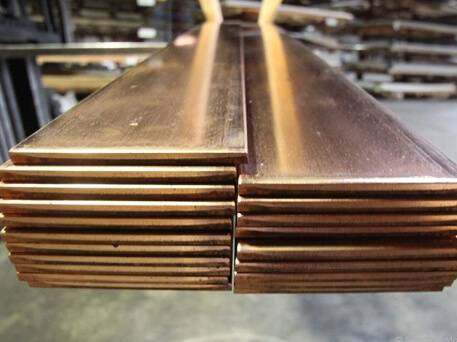
Copper bars sit quietly inside power rooms, factories, and control panels, doing work most people never see. They matter. Across grids and shop floors, they hold systems together through steady performance and long service life, shaped by years of practical use rather than passing preference.
That reliability does not appear by accident. Behind every dependable copper bar stands a supplier who controls quality closely, batch after batch, because small gaps in purity or finish show up later as heat, loss, or failure. Industry knows this. Experience teaches it fast.
Understanding Copper Bars
Copper bars are solid sections made from refined copper, produced thicker than rods or sheets and shaped for strength, contact, and current flow. Their forms change with the job. Flat bars slide into panels, round and square bars support mechanical builds, and bus bars anchor electrical distribution where currents are heavy and space is tight.
Grades matter here. Electrolytic Tough Pitch copper is widely chosen for strong conductivity, while oxygen-free copper is used when purity must be controlled with care, such as in sensitive electrical or industrial settings. These choices decide how a bar behaves under load. It shows up in daily operation.
What Makes Copper Bars Work So Well
Copper’s strength lies in how many useful traits sit together in one material, without drama. Its electrical conductivity allows current to pass with low resistance, which cuts energy loss and keeps systems efficient even when loads rise or demand shifts without warning.
Heat moves through copper easily too, spreading away from hot spots before they become problems. That, next to its natural resistance to corrosion in damp or chemical-heavy spaces, gives copper bars a long working life. They bend when needed, hold shape when required, and return to the cycle through recycling without losing what made them valuable. Few materials manage that balance. Copper does.
Electrical Uses That Depend on Copper Bars
In electrical systems, copper bars carry responsibility. They handle large currents inside switchboards and substations, keeping power flow stable even when demand spikes or equipment cycles on and off through long days of use.
Transformers and motors rely on copper bars for connections that stay cool and efficient, while earthing systems use them to guide fault currents safely into the ground. Renewable energy setups lean on copper as well. Solar fields and wind installations depend on consistent transfer and grounding, and copper bars quietly keep that work steady.
Industrial Roles Beyond Power
Outside pure electrical work, copper bars turn up wherever machines demand precision and reliable contact. Manufacturing lines use them where accuracy and conductivity meet, often under conditions that shift with heat, load, or vibration.
The automotive sector, especially with electric vehicles and charging infrastructure, draws heavily on copper bars for dependable energy flow. HVAC systems use them inside heat exchangers and condensers, helping manage temperature without wasted effort. Construction projects depend on copper for grounding networks that protect buildings and bridges over decades. Long life matters here.
Why Copper Wins Against Other Metals
Copper’s advantage shows in daily use rather than lab charts. Compared with aluminium, it carries more current in less space and resists surface damage over time, reducing maintenance needs that quietly add cost. Weight matters less when reliability matters more.
Against brass or steel, copper stands out for conductivity and resistance to corrosion, which keeps electrical performance predictable. Lower power loss means systems run cooler and cheaper to operate. Over time, those gains add up. Engineers notice.
Quality, Standards, and the Supplier’s Role
Good copper bars follow clear standards such as ASTM and IEC, covering purity, size, and finish so performance stays consistent across projects and locations. Reliable suppliers test and certify each batch, keeping traceability intact from production to delivery.
Buyers who ask for material certificates and quality reports avoid surprises later. It is a simple habit that protects long-term results. Quality shows itself slowly, often when cheaper options have already failed.
Choosing the Right Copper Bar Supplier
The product and the supplier cannot be separated. Long-established copper bar suppliers usually offer wider ranges, recognised certifications, and the ability to meet large or customised orders without delays.
Good suppliers support projects with technical input, clear communication, and steady delivery schedules. Trust grows from that mix. When materials arrive as promised and perform as expected, planning becomes easier and risks shrink.
Sustainability and the Road Ahead
Copper plays a central role in the move toward cleaner energy and smarter infrastructure. As electric vehicles, renewable power, and modern grids expand, demand for copper bars continues to rise, driven by practical need rather than trend.
Recycling keeps copper in use without draining resources, cutting waste and energy use along the way. Many copper bar suppliers now focus on responsible sourcing and recovery programmes, shaping a future where supply stays secure. Sustainability is no longer optional. It is part of the job.
Conclusion
Copper bars remain a steady choice because they work, year after year, across electrical and industrial systems that cannot afford uncertainty. Their conductivity, durability, and recyclability fit modern demands with little compromise.
Choosing reliable copper bar suppliers makes that performance predictable. As industries shift toward cleaner energy and more connected infrastructure, copper will stay at the centre, quietly dependable, doing what it has always done well.