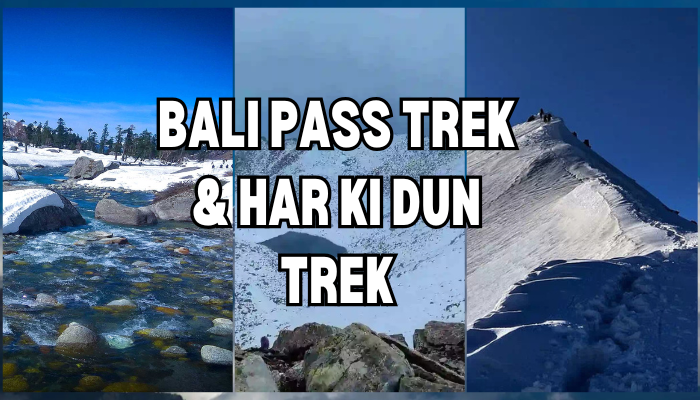
Bali Pass Trek and Har Ki Dun Trek are two of the most popular trekking routes in Garhwal Himalayas, Uttarakhand. Both treks begin from the same area around Sankri, but they offer two completely different types of trekking experiences: one is a high-altitude trek that has technical wilderness characteristics; at the same time, the other is a low-altitude trek and offers a culturally diverse, beautiful valley experience.
Bali Pass Trek—A Challenging High-Altitude Crossover
Overview
The Bali Pass Trek is a high-altitude trek where hikers pass through Har Ki Dun Valley to Yamunotri Valley while taking part in an extremely technical mountaineering experience. This route involves varied terrain from glacier fields to steep walls to ridge tops with continuous exposure from start to finish. This trek is only for those who have considerable mountaineering skills and experience.
Trek Highlights
Maximum Altitude: Approximately 16,200 Feet
Duration: 8-9 Days
Region: Govind Pashu Vihar National Park, Uttarakhand.
Difficulty Level
A longer walking duration, considerable steep rises, and climbing over snow, technical areas, and extremely steep climbs are involved; in addition, you must have prior experience in climbing at high altitudes and be capable of physical exercise.
Best Time to Visit
May to June—Both technical areas and snow have reached their maximum.
September to October—Less snow with clearer skies but with much colder temperatures at night.
Who Should Choose Bali Pass
- Bali Pass is for experienced trekkers.
- Hikers wishing to accomplish a summit challenge.
- Those who are used to the snow, ice, and high exposure.
Har Ki Dun Trek – The Valley of Gods
Har Ki Dun Trek, which is also famous as the Valley of Gods, is one of the most popular treks in the Garhwal Himalayas because of its offerings like wide open meadows, an ancient village with diverse culture & traditions, and mythological significance linked to the Mahabharata, all these with a basic level of difficulty, and that makes this trek the best fit for first-timers as well as beginners.
Trek Highlights
Maximum Altitude: Approximately 11,700 ft
Duration: 6 Nights & 7 Days
Region: Govind Pashu Vihar National Park, Uttarakhand.
Difficulty Level
Beginner to Intermediate (this trek is well-marked and has a slow altitude change, making it suitable for first-time trekkers or families in good physical shape)
Best Time to Visit
April – May: Spring flowers are blooming, great temperatures for trekking.
September to November: Clear skies and fall colours make it a great time to go trekking.
December – March: Snow trekking is possible, but it is more technical.
Who Should Choose Har Ki Dun
- Casual trekkers or beginners
- People interested in the cultural aspects of the area
- Trekkers seeking a more leisurely experience in the Himalayas.
Safety & Preparation Tips (Applicable to Both Treks)
The most important thing to consider while trekking to both Bali Pass and Har Ki Dun is proper acclimatisation.
Proper layering throughout the complete treks. Weather conditions below freezing have been recorded on both treks in winter and autumn.
Trek with certified trek leaders & local guides while on either of your treks.
To prepare your body for the trek,build up strength with resistance/strength exercise along with aerobic fitness routines.
Make sure to check on both theweather conditions and required permits prior to your treks.
Conclusion
Bali Pass Trek and Har Ki Dun Trek both offer unique experiences of a wide range of variety in the Himalayas. Bali Pass serves as theultimate adventure, technical experience, and high altitude. While Har Ki Dun gives you an opportunity to see some incredible panoramic vistas and experience some amazing local culture. In other words, you will not find a single trek like either of these two treks in comparison to each other. Your decision on which is “better” should not be based on how much more challenging one trek may be, but rather on which you are more ready for now and in the future, both physically and mentally.