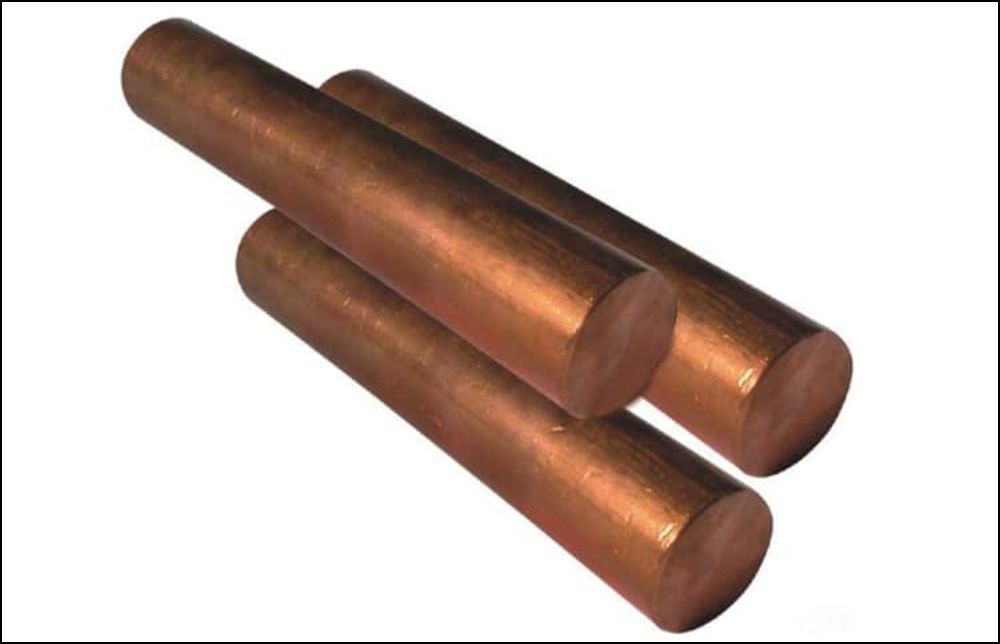
Copper is of immense use in the current technologically advancing era. Starting from the entire network of electricity distribution systems, automobiles, renewable source of energy, and whatnot, the usefulness of copper can be seen in every product. With the growth of the automobile and renewable source of energy sectors, focusing on electric power transmission and transfer is becoming the need of the hour. Copper bar and copper rods come in handy in this regard.
What Are Copper Bars and Rods?
Copper bars and copper rods are sold as cylindrical products made by an extrusion or continuous casting process. Copper bars are made by melting pure copper into desired shapes. Copper bars are often sold as C11000 or C10100, depending upon their purity level.
The rods have a circular shape, while the bars are usually supplied in flat, square, and hexagonal shapes. The rods are recognized by their strength, durability, and processability in an industrial and electrical setting.
Important Properties of Copper Bars and Rods
Copper is selected for many projects because of its unique combination of physical and chemical characteristics.
Excellent conductivity
Copper can pass electricity and heat through it without resistance, which minimizes wastage of connected energy and prevents overheating.
Corrosion resistance
Copper can form a protective layer when exposed to air and/or moisture. This protects it against further corrosion.
Ease of fabrication
The metal can be cut, shaped, drilled, and folded without breaking apart because of its properties.
Durability and recyclability
The performance of copper components lasts for many years. The components also offer the advantage that when they have provided their service, they are recyclable without losing any of their inherent advantages.
Common Types of Copper Bars and Rods
Different grades and shapes are available to meet specific operational needs.
Electrolytic Tough Pitch (ETP) Copper
This widely used grade offers high purity and excellent conductivity. It is commonly found in electrical connectors, terminals, and busbars.
Oxygen-Free (OF) Copper
Produced in a controlled environment to eliminate oxygen, this type provides superior performance in high-temperature or sensitive electronic applications.
Phosphorus Deoxidized (DHP) Copper
Enhanced with phosphorus for better weldability and corrosion resistance, this copper is ideal for plumbing systems and heat exchangers.
Shape Variations
Flat bars are often used in electrical panels, square bars add structural stability, and round rods are suited for fasteners, pins, and general engineering components.
Industrial Applications
Copper bars and rods serve a wide range of industries due to their reliability and performance.
Power and electrical systems
They function as busbars and conductors in switchgear, transformers, and substations, carrying large electrical loads safely.
Automotive and transportation
Electric vehicles rely heavily on copper for motors, batteries, and charging systems. Copper rods are also used in fabrication and assembly.
HVAC and refrigeration
Because of their thermal efficiency, copper components help maintain effective cooling while reducing energy consumption.
Manufacturing equipment
Industrial machines use copper parts such as bushings, connectors, and wiring to handle heat and friction during continuous operation.
Construction and architecture
Copper is chosen for lightning protection, roofing accents, and decorative finishes due to both its strength and visual appeal.
Standards and Quality Requirements
Copper bars and rods are manufactured according to international standards like ASTM B187 and EN 13601. Such standards cover the items regarding mechanical properties, dimensions, and surface quality. The tests, among which are eddy current inspections, are performed to make sure that materials have no defects. Working with certified suppliers means working according to these quality benchmarks.
Benefits of Using Copper Bars and Rods
Copper offers several long-term advantages for industrial applications.
Reliable performance
It has durability and conductivity in a wide range of temperatures.
Energy savings
Less electrical resistance means that there is less energy wastage and hence a more efficient system.
Reduced maintenance
Its natural resistance to corrosive substances reduces replacements and downtime.
Long-term value
Though it may cost a little more up front, copper wire’s lifespan and the fact that it can be recycled make it a cost-efficient choice in the long run.
Selecting a Trusted Copper Rod Supplier
Choosing the right supplier is just as important as selecting the right material. A dependable partner should offer:
- A wide range of sizes and customization options
- Secure Packaging to Facilitate Safe Transportation
- Proper documentation like Mill Test Reports
- Compliance with industry standards
Reliable sourcing helps ensure consistent quality and timely project completion.
Conclusion
Copper bars and rods are still unreplaceable in modern industrial sectors due to enhanced conductivity, longevity, and versatility. Regardless of whether they are used in utilities, production plants, or advanced vehicles, these products ensure performance for many years. Investment in quality copper products from experienced firms culminates in excellence in terms of quality, reliability, as well as durability.