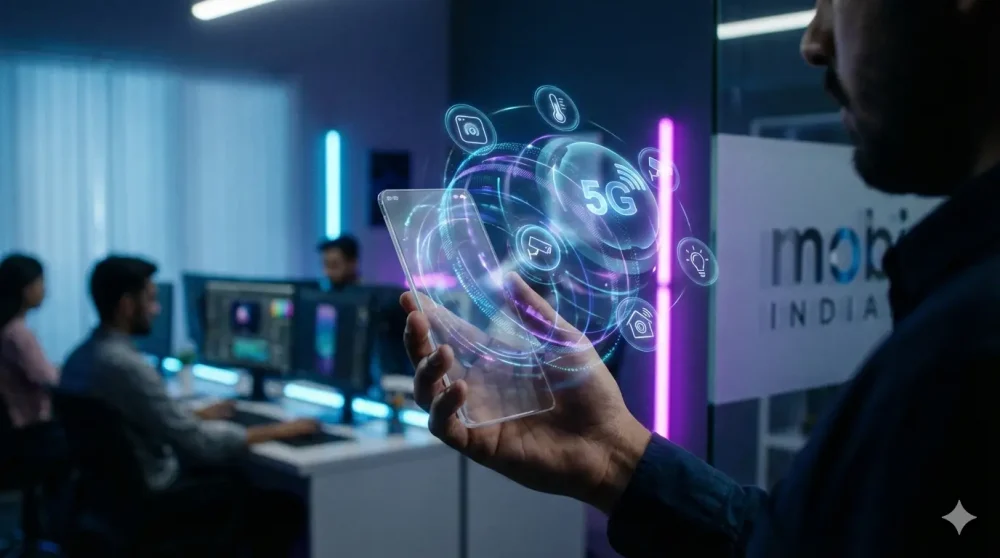
It feels like just yesterday we were talking about how 5G might change things or how basic chatbots were the next big deal. But stepping into 2026 the landscape of mobile app development has shifted into something much more intense and personal. It is no longer just about having an app that works on a phone. Now it is about how that app lives across your watch and your glasses and even your car dashboard while actually understanding what you want before you even tap the screen.
If you are running a business or planning a new product the old rules for building apps are basically out the window. People do not just want utility anymore they want an experience that feels like it was built specifically for them. Let’s look at what is actually happening in the world of code and design this year.
The Real Power of AI and On-Device Intelligence
We have moved past the phase where AI was just a fancy word for a support bot that could barely answer a question. In 2026 mobile app development is built around “Agentic AI.” These are apps that don’t just wait for you to click a button. They act like assistants.
For example a banking app today doesn’t just show you a list of transactions. It notices you spent more on coffee this month and automatically moves some money into your savings because it knows your goals. The big shift here is on-device processing. Apple has pushed this hard with ios app development because keeping the data on the phone makes things faster and way more private. You aren’t sending every single click to a cloud server anymore. The phone itself is doing the heavy lifting which makes the whole experience feel instant and much safer for the user.
Why Flutter is Dominating the Scene
For a long time developers had to make a tough choice between building two separate apps for iPhone and Android or settling for a “hybrid” app that felt a bit laggy. That debate is pretty much over now thanks to how much flutter app development has matured.
Flutter has become the go-to for most of our projects in 2026 because it finally solved the “jank” problem. It uses its own rendering engine so the app looks and feels exactly the same whether you are on a high-end iPhone or a budget Android device. From a business perspective it is a no-brainer. You write one codebase and it works everywhere. But what is really cool this year is how Flutter is being used for things beyond phones. We are seeing it power the interfaces of smart fridges and car entertainment systems. It is basically becoming the universal language for screens.
The New Face of iOS Development
Apple hasn’t been sitting still while cross-platform tools grow. If you are looking at ios app development specifically the focus has shifted heavily toward spatial computing and the “Apple Intelligence” ecosystem.
With the Vision Pro and newer wearable tech becoming more common iOS apps are moving out of the flat screen. We are seeing a lot of “micro-interactions” where an app on your phone sends a tiny relevant piece of data to your watch or glasses based on where you are standing. If you walk into a grocery store your shopping list app should just pop up on your wrist without you touching anything. That kind of context-aware design is the gold standard right now. It is less about “opening an app” and more about the app being there when you need it.
5G is Finally Doing What It Promised
We spent years hearing about 5G and for a while it just felt like slightly faster internet. But in 2026 it is actually changing how we build the architecture of mobile apps. Because the latency is almost zero now we can offload huge tasks to the “edge.”
This means apps can do things that were impossible before. Think about real-time language translation where two people are talking and the app translates the audio instantly with almost no lag. Or AR shopping where you can point your camera at your living room and see high-resolution furniture that looks perfectly real because the heavy 3D rendering is happening nearby on a server instead of draining your battery. This is a huge trend for mobile app development because it lets us build lighter apps that do much heavier things.
The Rise of Low-Code for Rapid Testing
Another thing we are seeing is that the “barrier to entry” for building an app is changing. Not every single piece of an app needs to be hand-coded by a senior engineer anymore. We are using low-code tools to build the “boring” parts of apps like admin panels or basic forms so we can spend more time on the custom features that actually matter.
This is great for startups. You can get an MVP (Minimum Viable Product) out in weeks instead of months. You test the idea and then you bring in the experts to scale it using flutter app development or native Swift once you know people actually want the product. It is a much smarter way to spend a budget.
Security is No Longer a “Feature”
In the past security was something you checked off at the end of a project. Now it is the starting point. With all the AI and data being processed users are very sensitive about their privacy.
We are seeing a move toward “Zero Trust” architecture in almost every project. This means the app assumes everything is a potential risk and verifies every single action. Biometric locks like FaceID are now the bare minimum. In 2026 many apps are moving toward decentralized identity where the user owns their data and only gives the app “permission” to see it for a few seconds. If you aren’t building with a privacy-first mindset your app probably won’t even make it past the App Store review.
What This Means for Your Business
If you are looking at the mobile market this year the biggest mistake you can make is building a “static” app. The world is moving toward apps that are fluid and smart and work on more than just a phone screen.
You should be asking yourself:
- Does my app save the user time by predicting what they need?
- Is it built on a framework like Flutter so I can scale to new devices easily?
- Am I taking advantage of the privacy features in modern ios app development to win user trust?
The tech is more powerful than ever but the goal is still the same. You want to solve a problem for someone in the easiest way possible. Whether that is through a smart AI agent or a beautifully designed cross-platform interface the focus should always be on making the user’s life a little bit simpler.