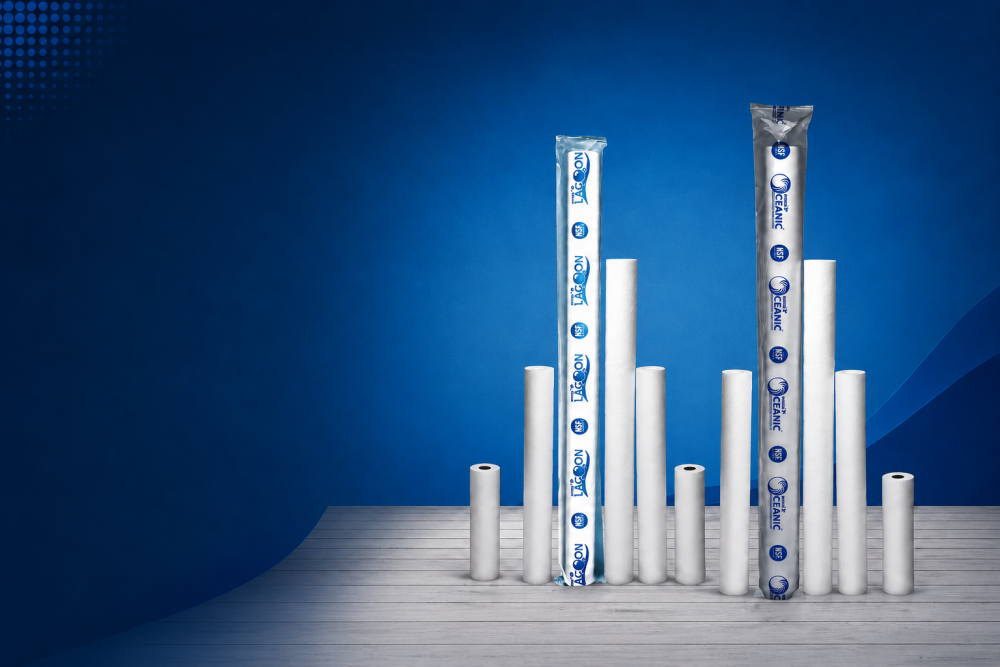
Most plants don’t have a filtration problem. They have a selection problem. The cartridge goes in the house, runs fine for a week or two, and suddenly the pressure rises. The flow drops off.
The cartridge is changed, and the process repeats, with the assumption that the cartridge quality must be bad.
The cartridge is suitable in a majority of these cases; it is just that it was not a fit for that particular line. This is often seen on spun cartridge-based filtration systems because the spun cartridge is very widely used in industrial systems and is very often misapplied in the process.
What a spun cartridge actually does
A PP Spun Filter is constructed by the spinning of polypropylene fibres to form one integral piece with no adhesives, resins, or binders. The spun fibres are constructed in such a manner that the outer layers are coarser or more open and the interior of the element will have finer fibres.
The structure counts strongly. Water passes through the outer, loose media, which traps larger particles as it does. The finest particles get down further into the cartridge before being captured. Instead of piling up at the surface, the dirt is dispersed throughout the thickness of the Spun Filter Cartridge, which allows for much higher sediment holding capacity before the differential pressure starts to become an issue.
This also accounts for why the Polypropylene Spun filter is used so much in borewell water, cooling water, and general process water applications. They are cost-effective, chemically compatible with most water applications, and do not lose their binder to the process stream.
Where selection usually goes wrong
Most early blockages result from these three types of errors:
- The micron rating is too fine for the first stage. A 1 micron cartridge sounds like the safer choice. On a line carrying heavy sand or silt, it will block within days. Sediment removal belongs at a coarser rating, with the fine work handled further downstream.
- The flow rate is not monitored. A filter sized for one flow rate will perform extremely differently at another flow rate. If you push water through the cartridge at a flow rate higher than its rating, the pressure drop will increase much faster than you expect.
- The wrong construction was specified. Although the micron rating may be the same, a Sediment Filter Cartridge does not replace a fine polishing cartridge. A PP Melt Blown Filter Cartridge may well do the job better if tighter, finer retention is required due to its finer fibre construction.
Getting the selection right
- Check inflow water for silt quantity and particle size.
- The micron rating will depend on the type of filtration required. You should start with coarser and then switch to finer at later stages.
- Check that the flow rate is comparable to the cartridge specification
- Check the housing is properly sized for the cartridge and sealed properly so there is no bypass.
- The decision for when to replace the cartridge will be based on the pressure loss, not based on the calendar.
The last point is worth considering. A Spun Water Filter may last months with clean, filtered water or a few weeks with a contaminated borewell supply. Simply putting a replacement date is irrelevant to what actually is happening in the line. Keeping track of the difference in pressure across the housing is a better indication.
How Staged Filtration Works
In the case of a dirty and heavy load of sediment, the answer will typically not be to put in a finer sediment cartridge but rather a second stage.
Place a coarse cartridge in the upstream filter to remove most of the sand and silt, followed by a fine cartridge to remove the rest. The coarse filter is cheap and inexpensive to change, and as it protects the finer filter, it lasts a long time. Total filtration cost usually comes down despite the added filter.
Manufacturers who offer the full suite across spun, melt-blown and pleated formats are typically best equipped to guide in this area, because they are not obliged to recommend only one item that they manufacture. MMP Filtration, for instance, manufactures across all three categories for industrial water and process-liquid duties.
Industrial water filter cartridges are less about finding the suitable cartridge for use in the system, and more about selecting the cartridge that matches the water conditions before the filter.
Conclusion
Few spun cartridges fail due to manufacturing quality issues. They fail because the line it was installed in was never truly known. The water quality changes; what was a clean bore well may pull more sand after a dry season, and the cartridge specifications on the purchase order haven’t changed. That gap between how the line is operating and what the cartridge was chosen for is where most filtration problems occur.
Regular water analysis, rather than reordering filters based on an old specification, helps keep your filtration system performing as it was designed to.