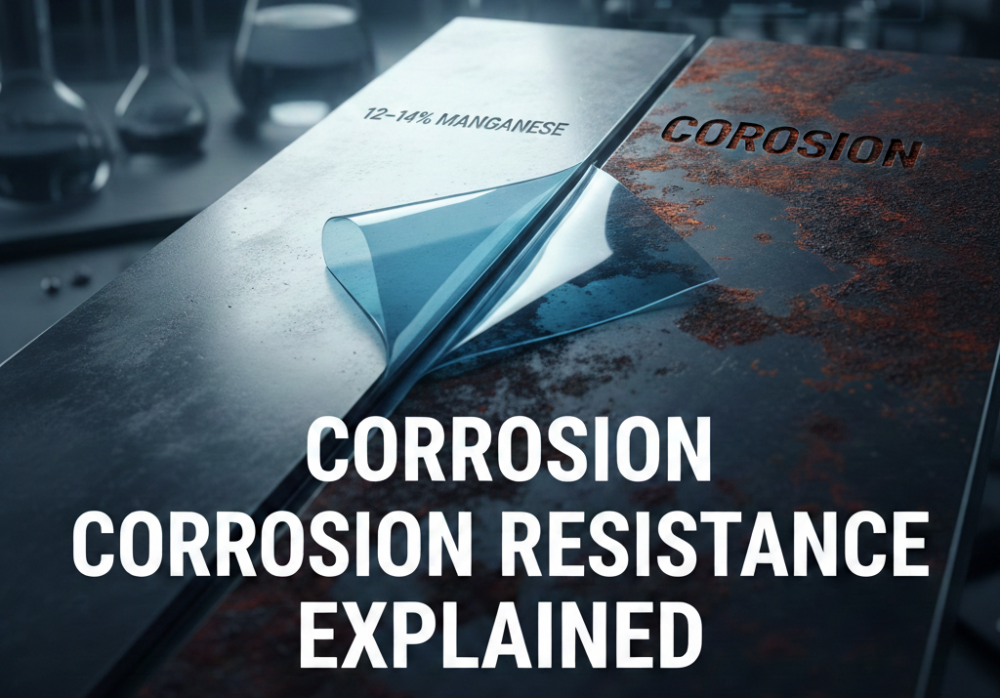
12–14% manganese steel plates are tough. Really tough. They take an impact that would wreck most other steels. Engineers usually talk about wear first. Strength comes next. Corrosion is often an afterthought. But in real sites, it matters. A lot.
You’ll see these plates in crushers, hoppers, railway crossings, and heavy earthmoving gear. They handle dust, moisture, and slurry. But leave them wet and unprotected, and they will rust. Knowing how they behave in the field can save maintenance headaches and downtime.
What’s in the Steel?
These plates usually have 11–14% manganese and 1–1.4% carbon. It doesn’t sound like much, but it makes a big difference. The steel stays austenitic at room temperature. When the surface is hit repeatedly, it hardens. The core stays flexible. That’s why it survives repeated shocks without cracking.
It’s why crusher jaws and railway liners last longer than you’d expect. And the chemical makeup affects corrosion more than most people realise. A tiny tweak in composition can make the difference between a plate that rusts quickly and one that lasts years.
Corrosion Behaviour
12–14% Manganese plates isn’t stainless. It won’t magically resist corrosion. There’s not enough chromium for that. Still, the manganese does give it some resistance in damp conditions.
Dry conditions? Rust hardly forms. Wet conditions? A little surface rust will appear over time. But cracks won’t grow easily because the steel’s structure resists corrosion fatigue. These plates are best for abrasive or impact-heavy applications. If you throw strong chemicals at them, they will fail. Coatings or cleaning help, but don’t expect miracles.
How Alloying Matters
Manganese makes it strong and tough. Carbon keeps it austenitic and helps the surface harden. Silicon, phosphorus, sulphur – they’re there in tiny amounts. They affect oxidation a bit. That’s all.
These plates rely on bulk strength more than a protective surface layer. Sure, a thin oxide layer forms, but it won’t stop rust in aggressive conditions. Cleaner steel, with controlled impurities, behaves predictably, especially in damp or wet environments.
Why Corrosion Resistance Counts
Even moderate corrosion resistance is worth noting:
- Lasts longer than plain carbon steel.
- Needs fewer replacements.
- Keeps working in ports, coal handling, or processing plants.
- Handles mild acids or alkalis. Not strong chemicals, just mild ones.
- Work hardening helps resist wear and slows corrosion.
- Maintains thickness and strength over years.
In short, it’s practical steel. Not perfect, but dependable.
Real-Life Applications
Mining and quarrying – crusher liners and chutes deal with wet ore and slurry. Rust is inevitable, but moderate resistance keeps them going.
Cement and aggregate plants – hoppers and feeders see dust and moisture. Plates must handle abrasion and slow surface rust.
Railway crossings – rain, mud, heavy loads. Manganese steel still works when other steels start to fail.
What Makes Corrosion Worse
- Humidity, salt, acidic water – they all speed up rust.
- Poor welding near joints can weaken corrosion resistance. Heat changes the steel’s microstructure.
- Heavy impact in damp conditions removes protective layers. Check the plates regularly.
Simple Maintenance Tips
- Clean surfaces. Dirt and slurry trap moisture and speed rust.
- Paint or anti-rust coatings help outdoors.
- Inspect often. Catch rust early before it goes deeper.
Even small efforts can add years to a plate’s life.
Conclusion
12–14% manganese steel plates are strong, tough, and moderately corrosion-resistant. Perfect? No. Durable? Yes. Ideal for mining, cement, and railway equipment exposed to wear and moisture. Not meant for strong acids or long-term seawater without extra protection.
Handled well, they last for years, reduce downtime, and save money. Choosing the right supplier and grade matters. A plate isn’t just metal; it’s part of your operation. Treat it wisely, and it will repay you many times over.